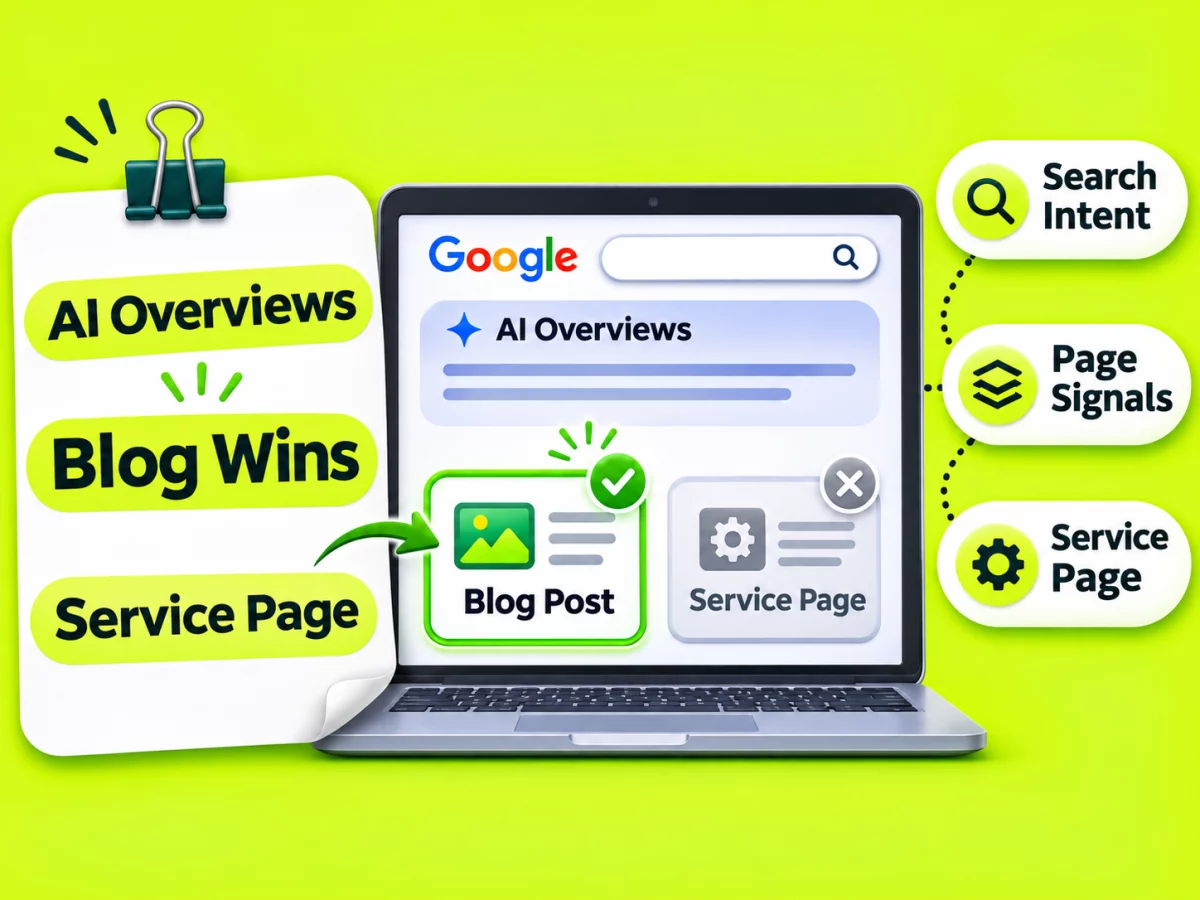
Google AI Overviews may cite your blog while leaving out a related service page. The blog might answer a question in its opening lines. Your service page might mention the service without stating its scope, location, or booking terms. Google may also have trouble reading part of the page.
Check the question, compare both URLs, and test what Google can read. A blog citation alone cannot reveal why Google chose that link.
Search Intent Changes Which Page Answers the Question
Search intent is the reason behind a search. Someone seeking warning signs needs an explanation. Someone seeking a provider needs service details and a contact method.
Consider a hypothetical warehouse pest-control company in Indore. Its blog covers rodent warning signs. Its service page offers warehouse inspections. Compare three possible searches:
| Search question | What the reader needs | Page to check first |
|---|---|---|
| What are the signs of rodents in stored goods? | Warning signs and the limits of a visual check | Blog |
| Who provides warehouse pest inspections in Indore? | Service area, work covered, and enquiry details | Service page |
| I found rodent signs. Can someone inspect my warehouse? | An answer about the signs and a booking option | Both |
The blog can answer the first question well. Review the service page when customers ask for a local provider.
Query Fan-Out Can Bring Another Page Into the Answer
Query fan-out means Google can search related subtopics while preparing an AI answer. A warehouse question might lead to searches about rodent signs, site inspections, and local companies. Google confirms query fan-out for AI Overviews and AI Mode. These example searches are hypothetical; Google keeps each actual sequence private. Compare each linked page with the original question.
Answer-First Writing Makes a Blog Passage Useful
An answer-first structure puts the direct response near the opening of a section. A self-contained text passage names the subject and includes enough detail to make sense alone.
A blog about warehouse rodents could open with a useful answer:
Blog answer: Rodent droppings and gnaw marks can signal activity near stored goods. Check affected areas and seek an inspection before choosing treatment. The CDC identifies droppings and gnaw marks as rodent signs.
Vague service copy: Trusted solutions with outstanding service and modern methods. Those words omit the warehouse service, location, and booking step.
A stronger opening for the same hypothetical company:
Service answer: We offer warehouse pest inspections in Indore. Share your site location and reported problem to request an inspection quote. Publish these details only when the company confirms them.
Google sets no required chunk length. The aim is a complete answer people can read.
Replace Marketing Jargon With Extractable Service Facts
Extractable facts are details that someone can identify, check, and use. Service pages sometimes hide them behind banners, broad claims, and contact buttons.
For the Indore example, a visitor looking for an inspection needs:
- Coverage: Which parts of Indore and which types of warehouses the company serves.
- Scope: What an inspection includes and which tasks need separate approval.
- Quote terms: Which site details the company needs before providing a price.
- Next step: How to request a visit and when the team can respond.
Write those facts under headings such as Warehouse Inspection Scope and Request an Inspection Quote. Use confirmed company terms, rather than invented prices or guarantees. A sentence about premium quality cannot replace an answer about service coverage.
Use Conversational Queries Without Repeating Keywords
A long-tail query is a detailed search phrase. A conversational keyword footprint comes from answers written around the questions customers ask. Natural language processing (NLP) is a broad term for how computer systems work with human wording.
A warehouse manager might ask, Can a team inspect my site after closing? The service page should state its actual visit hours or booking conditions. Another visitor might ask about an inspection quote for a large storage site. State which site details affect the quote when the business can confirm them.
Use natural service terms such as warehouse pest inspection, Indore, and inspection quote. Avoid adding every possible question as a separate heading. Google confirms that exact keyword variants are unnecessary.
Check the DOM and Hidden Content Before Changing the Layout
The Document Object Model (DOM) is the page structure a browser builds from HTML. The rendered DOM includes content that JavaScript adds after the page loads. These details matter when Google cannot find essential service text.
In Google Search Console, inspect the service URL and open the rendered HTML. Search for one full sentence from the inspection scope. Confirm the main heading and booking information also appear.
Three checks matter most:
- Indexing: Google has indexed the intended service URL and can show a search snippet.
- Text access: The rendered HTML contains the service answer and its contact link.
- Reading order: Headings, paragraphs, and lists form a sensible sequence for visitors.
An <h2> above a complete paragraph can help readers scan the page. Multi-column grids and flexbox can work when Google can read the text. Google recommends semantic HTML while accepting imperfect page code.
When JavaScript Tabs, Accordions, or Sliders Hide Facts
Open the page inspection view without clicking any tabs. Find the words inside the pricing, service, or booking panel. If Google cannot see that text, ask your developer to load it without a user click.
A closed accordion can work when its text already appears in the rendered HTML. Google warns against content loading that depends on user interaction.
Schema Markup Cannot Choose Which URL Google Cites
Structured data priming is an informal term for adding machine-readable labels. Google calls the code structured data or schema markup. Article and BlogPosting describe editorial content. FAQPage identifies questions and answers in schema.org.
Schema labels cannot control which page Google cites. Google requires no special GEO schema or llms.txt file for AI Overviews. Its official guidance states those limits.
Google ended FAQ rich results in May 2026. Adding FAQPage markup therefore offers no shortcut to that feature. Apply supported markup when it matches visible page facts, and address missing service text first.
Evidence Density Needs Proof for Each Claim
Evidence density describes how much useful proof supports the claims on a page. It is an editorial test, rather than a published Google citation score. A blog may include outside research while a service page offers only promises.
The two pages need different kinds of proof. A rodent-signs article can cite the CDC for general warning signs. An inspection service page needs its own approved scope, booking terms, and current service area. A claim about completed work needs genuine records and permission to publish them.
Check the claim before adding the link. An outside study cannot verify which Indore areas a company serves. Use approved business records for service claims and authority sources for general facts.
Connect the Blog to the Service and Measure Both
Leave the full warning-sign answer on the blog. Add a natural link to the inspection page when readers need professional help. Put the booking terms on the service URL, rather than repeating the full article there.
Compare both URLs in Search Console. Its Generative AI performance report shows impressions for links in AI Overviews and AI Mode. The Pages tab can compare the two URLs across the same dates and country. The report provides no separate AI click count or complete list of search questions.
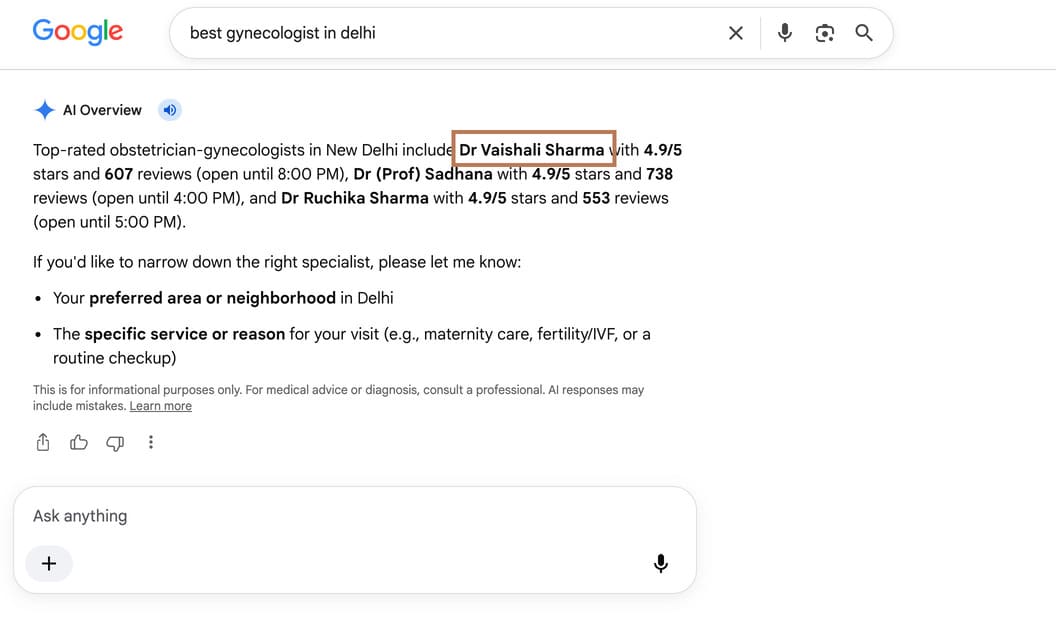
For an individual AI Overview, record the question, location, date, and cited URLs. Test one research search and one service search. Then decide what to change:
| What you find | What to change |
|---|---|
| Blog answers a research question well | Leave its answer intact and add a relevant service link |
| Service page omits area, scope, or booking terms | Add the confirmed facts near the top |
| Important service text is missing from rendered HTML | Fix the loading issue with your developer |
| Both pages answer their questions and Google can access them | Continue monitoring without forcing a rewrite |
Track website visits and enquiries through your own analytics and lead records. An AI link impression records visibility, rather than a customer booking. A missing citation alone proves no specific content defect.
For a wider test, see SEO Noida on running an AI search audit.

Manish Singh is Head of Generative AI at SEO Noida and has 14+ years of experience in SEO, UX, and digital marketing. He focuses on how Google and AI platforms find, interpret, and cite web content. His articles cover AI SEO, GEO, AEO, LLM SEO, entity optimization, content architecture, and visibility measurement, drawing on website audits and campaign work.