To optimize your website for generative AI search, start with pages that bring enquiries. Your service pages, local pages, and contact pages need open access. Each page also needs direct answers, proof, schema, and useful links.
You do not need to rewrite every page first. Start with one page that already helps your business. Make that page easier for people and AI tools to read. Google states that SEO basics still apply to AI features in Search. Google names AI Overviews and AI Mode as examples.Google also states that no extra special optimization is needed for them.
What Is Generative AI Search Optimization?
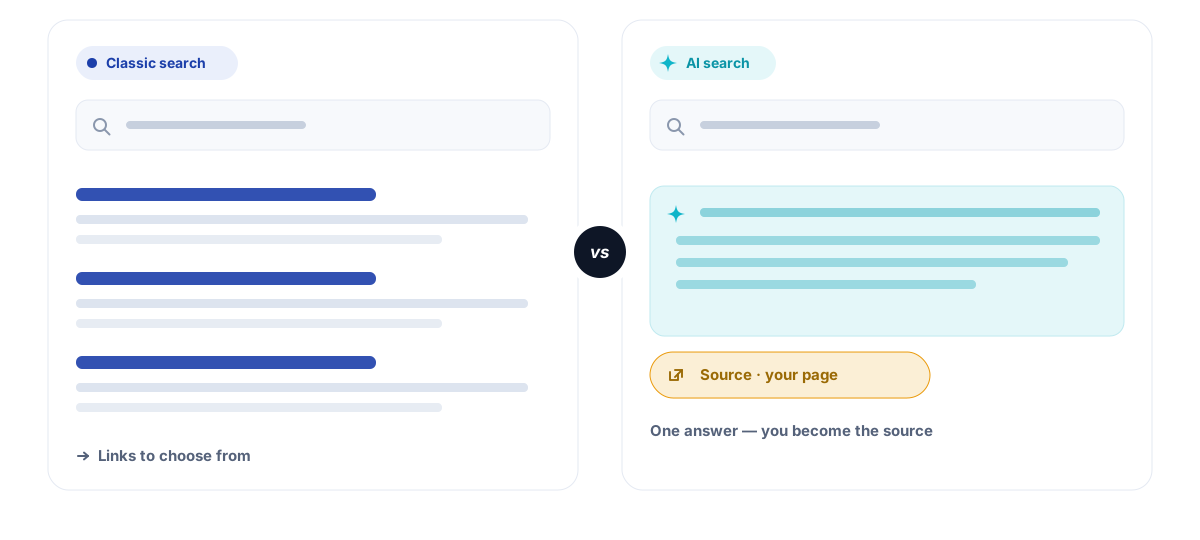
Generative AI search optimization prepares your website for AI answer tools. It helps AI tools find useful pages and cite sources.
Classic search shows links you choose from. AI search can answer inside the result. Some AI answers also show source links. Your page needs to become a useful source.
For your business, focus on one buyer question. Answer the question, support the answer, and name your service area. A useful page earns more trust than a keyword-heavy page.
Start With SEO Basics Before AI Search Tweaks
Some people call AI search work GEO. GEO stands for generative engine optimization. In plain words, GEO helps your page appear in AI-style answers. Google treats generative AI search work as part of Search optimization.
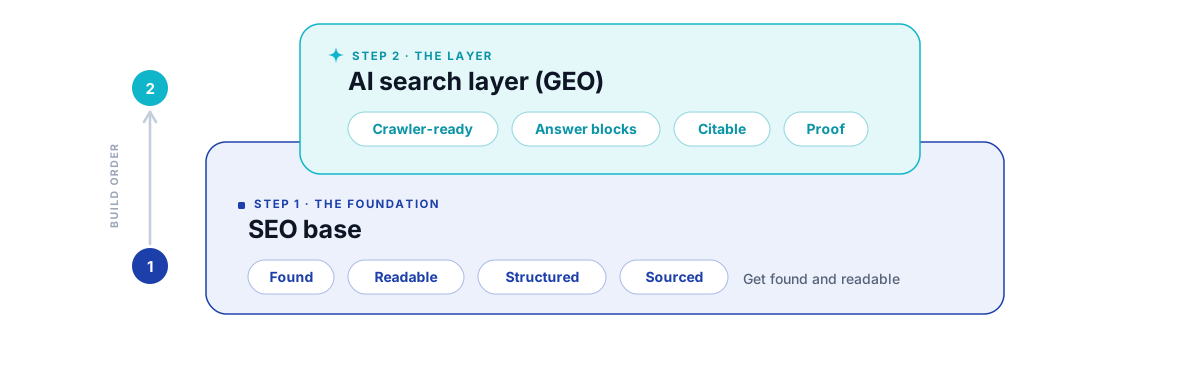
SEO helps your page get found. GEO helps your page become more useful in AI-generated answers. You need both, but SEO comes first.
SEO Base vs AI Search Layer
| SEO base | AI search layer |
| Page can be found | AI crawler checks |
| Content helps readers | Short answer blocks |
| Headings organize the page | Sections can be cited |
| Links connect useful pages | Topics connect together |
| Sources support claims | Proof supports trust |
Your dental page should answer buyer questions. Name the service, area, price concern, and booking step. Add proof near serious claims.
Google warns against creating many AI-made pages without useful value for readers. Use AI for support, not for weak pages at scale.
How AI Search Finds and Uses Your Content
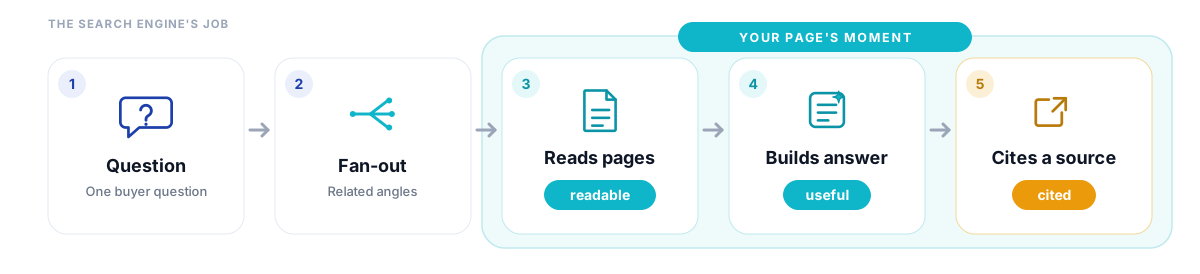
AI search needs pages it can reach and read. AI search also needs text that answers the question. Google describes a process called query fan-out. In plain words, Google can search for a single question from several related angles. The system then has more material for a wider answer.
AI Search Flow
- You ask a question.
- The AI tool looks for sources.
- The tool reads pages that support the answer.
- The tool builds an answer from available text.
- A source link can appear beside the answer.
Your page needs one strong answer for each main question. On a clinic page, answer the patient concern first. Then add service details, proof, and Noida context.
Make Your Main Pages Easy to Find
AI search cannot use pages blocked from access. Start with pages that bring calls, bookings, forms, or sales. Check the pages that matter before writing more content.
Check these items first:
- txt: a file that tells crawlers which URLs to access.
- noindex: a page tag that tells Google not to index a page.
- sitemap: a file that lists important pages for search engines.
- HTTP status: the page response, such as working or broken.
- visible main text: the content visitors can read on the page.
- Google indexing: whether Google can store the page.
- service page access: whether the page opens without blocks.
- firewall or CDN block: security rules that can stop crawlers.
Google says a page needs Search indexing and snippet eligibility for AI Overviews or AI Mode. Google also states that crawling, indexing, and serving are never guaranteed.
AI Crawlers to Check
OpenAI lists OAI-SearchBot, GPTBot, and ChatGPT-User. Each crawler has a different job. Perplexity lists PerplexityBot and Perplexity-User for its systems.
| Crawler | Platform | Plain use |
| Googlebot | Finds pages for Google Search. | |
| OAI-SearchBot | OpenAI | Helps show sites in ChatGPT search. |
| GPTBot | OpenAI | Helps OpenAI improve future models. |
| ChatGPT-User | OpenAI | Opens pages after user requests. |
| PerplexityBot | Perplexity | Helps surface and link sites in Perplexity. |
| Perplexity-User | Perplexity | Opens pages after user requests. |
If you manage a fertility clinic, review treatment pages first. Each page should load and show service details. Decide which AI crawlers can access your site before changing crawler rules.
Write Direct Answers Under Main Headings
Each main heading should answer one question. Add details, examples, or proof after the answer. Many sections work well with 25 to 45 words.
A good answer section helps two readers at once. Your visitor gets the point quickly. AI tools also get a clean passage to read.
Weak vs Better Example
Weak: Generative AI search changes digital visibility.
Better: Generative AI search returns written answers. Your page needs access, plain wording, and proof before citation.
Use answer-first content for every important H2. Put steps in lists and choices in tables. Place proof beside claims that affect buyer decisions.
Writing rules:
- Answer the heading first.
- Use one question per section.
- Add proof near serious claims.
- Use lists for steps.
- Use tables for choices.
- Remove warm-up lines.
Add Proof Beside Important Claims
Put evidence beside important claims. Use official sources for platform rules. Use dated studies, sourced examples, or brand-owned data for results.
A claim with proof helps your visitor trust the page. A claim without proof can sound like sales copy. If you cannot support a number, remove the number.
Proof Types to Use
| Claim type | Proof placement |
| Google AI behavior | Google official source |
| OpenAI crawler behavior | OpenAI official source |
| Perplexity crawler behavior | Perplexity official source |
| Result claim | Brand-owned result label |
| Data claim | Named study with date |
| Process claim | Screenshot, audit note, or example |
Label any client result as your own data. Add timeframe, market, page type, and keyword set. Never present your result as an industry average.
Use search volume only after checking a trusted tool. Use AI search research figures only with date and source. If proof is missing, remove the figure.
Use One Name for Each Important Thing
Use one name for each important item. Match your brand, service, city, and topic names across the page. AI tools and search engines read repeated names as connections. Your buyer also benefits from the same wording. Mixed names can make a page harder to follow.
Entity Examples
Weak names:
- our agency
- the provider
- the company
Preferred names:
- your brand name
- AI SEO services
- Noida-NCR businesses
A useful page names brand, service, area, and proof. Example: Your page can name AI SEO services for Noida-NCR businesses. Use ‘Noida’ and ‘Delhi-NCR’ only when you serve the areas.
Do the same for services. If your menu uses technical SEO, use that term across the page. Pick the name your customer would recognize.
Add Schema for Content Readers Can See
Schema is code that describes page content to search engines. Google uses schema to understand content and support rich results when a page qualifies. Google also says valid schema does not guarantee display in search results. Use schema only when it matches the page. If visitors cannot see the detail, do not mark that detail.
Schema Map for Your Page
| Page part | Schema |
| Blog post | Article |
| FAQ section | FAQPage |
| Breadcrumb trail | BreadcrumbList |
| Brand details | Organization |
| Visible service details | Service |
Use FAQPage schema only for visible FAQs. Avoid marking up details that visitors cannot see. Schema describes your page. It cannot promise rankings, traffic, or AI citations.
Connect Related Pages With Useful Links
Internal links move visitors to the next useful page. Use links where the reader needs the next step. If your section discusses page access, link to an audit page. If your section explains SEO basics, link to your services page. Use anchor text that names the next step. Link an AI-search visibility audit to your contact page. Link SEO services for Noida businesses to your service page.
Avoid too many links in one place. One useful link beats five weak links. Each link should answer the next question.
Show Your Noida-NCR Service Area
Your local page should show service, area, buyer type, proof, and next step. AI answer tools need local context to match your page. Your buyer needs that context before sending an enquiry. This section helps local buyers know you serve them. It also helps your page match local questions.
Local Page Example
On a Noida clinic page, name treatment, city, patient question, and proof. Add the booking step beside the answer. On a B2B page, name product type, Delhi-NCR reach, buyer concern, and enquiry step.
Use a local checklist:
- Service
- Location
- Buyer type
- Proof
- Next step
Avoid city stuffing. Add place names where your service area helps your buyer.
Use a Generative AI Search Checklist
Use this checklist on lead pages first. Review one important page before changing the whole website. Work through the list slowly. You should finish with one stronger page, not a pile of half-fixed pages.
Checklist
- Page can appear in Google Search.
- Main text loads for visitors.
- txt allows needed crawlers.
- noindex blocks no target page.
- Sitemap includes the page.
- H1 matches the page topic.
- Each H2 starts with an answer.
- Important claims have proof.
- Brand name stays consistent.
- Service names stay consistent.
- Location terms appear where useful.
- Schema matches visible content.
- Related pages receive internal links.
- Page has a visible update date.
- Page avoids ranking or citation promises.
Use official platform pages for crawler and schema checks. Treat the checklist as an audit aid, not a writing formula.
Start With Pages That Bring Enquiries
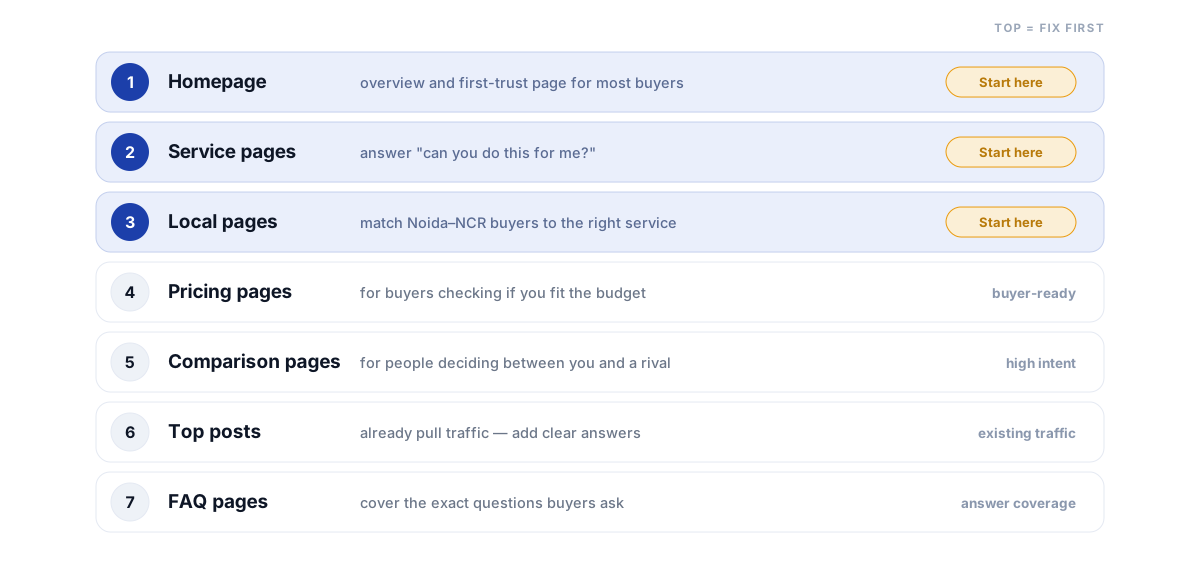
Start with pages that bring calls, forms, bookings, or sales. High-value pages deserve work before broad posts. A small site wins through better order. You do not need fifty edits across fifty pages. You need the right edits on the right pages.
Priority ladder:
- Homepage
- Main service pages
- Local service pages
- Pricing or package pages
- Comparison pages
- High-traffic posts
- FAQ pages
If you own a clinic, update treatment pages before broad posts. Treatment pages can answer patient questions and support bookings. If you manage property leads, update locality pages before news posts. Locality pages match buyers, sellers, and local enquiry intent.
Know What AI Search Can and Cannot Promise
AI search work can make your pages easier to access, read, and trust. It cannot force an AI tool to cite you. No agency can promise rankings, traffic, or AI citations. You can improve page quality, proof, access, and structure. The final source choice belongs to the search or AI system.
Google states that crawling, indexing, and serving are never guaranteed. Google also says valid structured data does not guarantee rich result display.
Use this section as a guardrail. Improve what you control. Avoid any vendor that sells guaranteed AI citations.
Check Which Pages AI Search Can Read
Review page access before adding more content. Fix blocked pages, weak answers, missing proof, and poor local context. You can start with one service page. That keeps the task manageable. Then repeat the same review.
Audit these areas:
- page access
- index status
- AI crawler access
- direct answers
- proof
- schema
- internal links
- local relevance
Open one service page. Check indexing, crawler access, answer quality, proof, schema, and links. Then move to the next lead page.
For a deeper review, request a free AI-search visibility audit. You will find access issues, weak answers, proof needs, and link opportunities.
What You Should Do Next
Start with one page likely to bring enquiries. Check whether Google can index it. Add one direct answer under the main heading. Add one proof point near an important claim. Add schema only for visible content. Link the page to the next useful step.
Then repeat the review for another lead page. Small fixes on high-value pages can beat full-site rewrites.
FAQ
What is generative AI search optimization?
Generative AI search optimization prepares your website for AI answer tools. It helps your page become easier to find, read, trust, and cite.
Start with your main service pages. Add short answers under headings, proof near claims, schema for visible content, and links to helpful next pages.
Is GEO the same as SEO?
GEO and SEO serve different purposes, but they work together.
SEO helps your page get crawled, indexed, and ranked in search. GEO helps your page become more useful in AI-generated answers. For Google, build AI search work on SEO basics because Google connects AI features with Search systems.
Does llms.txt help with Google AI Overviews?
Google Search does not use llms.txt for Google visibility. Google names it as an item site owners can ignore for Google Search.
Other AI systems can treat AI text files differently. Check official rules for each platform before adding files to your site.
Which AI crawlers should I check?
Check Googlebot first because Google Search access still matters. Then review OpenAI and Perplexity crawlers if you want OpenAI or Perplexity tools to access your site.
The main names to review are OAI-SearchBot, GPTBot, ChatGPT-User, PerplexityBot, and Perplexity-User. Some crawlers help search. Some help improve tools. Some open pages only after a user request. Read official crawler pages before blocking anything.
Does schema help with AI search?
Schema helps search engines read page content. It can help your page qualify for richer search results when the markup matches visible content.
Schema cannot promise AI citations. Use it to describe the page, not to force a result. Add FAQPage schema only when the FAQ appears on the page.
Can anyone promise AI citations?
No agency can promise AI citations. Any promise like that should make you pause.
You can improve the parts you control: crawl access, answer quality, proof, schema, name consistency, and page usefulness. These steps make your page stronger, but the AI system still chooses sources.
What should a Noida business optimize first?
Start with pages that bring leads and enquiries. For many Noida businesses, start with the homepage, service pages, local pages, strong posts, FAQs, and contact page.
Do not start with low-value blog posts only because the edits look easier. Start where a better answer can support a call, booking, form, or enquiry.
How do I know if AI search can read my website?
Check whether your page can be indexed, loaded, and read. Then check whether the page answers the main question with proof.
You should review visible text, crawler access, schema, internal links, and page blockers. If one item breaks, fix that page before adding new content.

Manish Singh is Head of Generative AI at SEO Noida and has 14+ years of experience in SEO, UX, and digital marketing. He focuses on how Google and AI platforms find, interpret, and cite web content. His articles cover AI SEO, GEO, AEO, LLM SEO, entity optimization, content architecture, and visibility measurement, drawing on website audits and campaign work.