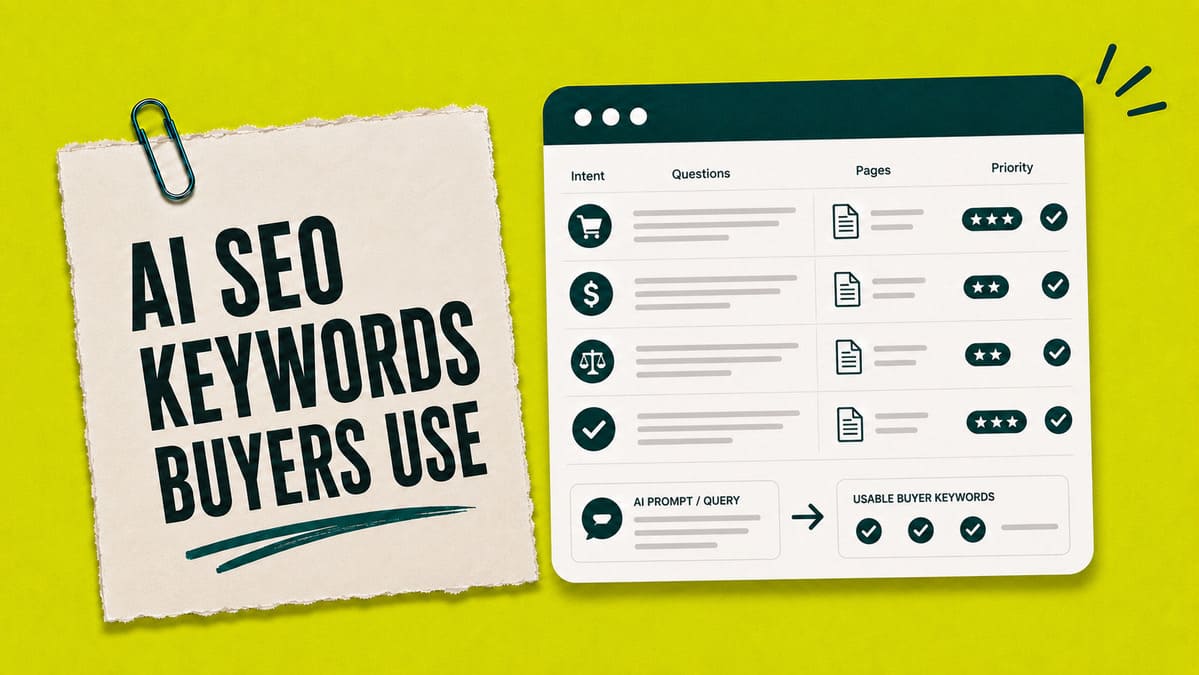
Good AI SEO keyword research helps you find those buyer keywords. Start with what your buyer wants. Then turn that need into search questions. Add buying signals and check each idea before writing. AI SEO keywords are buyer questions and search terms used before a choice. Buyers can use them in Google, AI answer tools, voice search, and local searches.
To find AI SEO keywords, start with buyer intent. Turn the need into full buyer questions. Add words for price, place, trust, comparison, problem, or urgency. Check each keyword with search data, live SERP results, and customer words. Create content only after the keyword matches buyer intent.
What Are AI SEO Keywords?
AI SEO keywords are search terms tied to buying research. They show what your buyer wants before a call, booking, quote, visit, or purchase.
A short keyword usually names one broad topic. A stronger keyword shows buyer intent. It adds useful details such as place, price, proof, problem, or action.
Common AI SEO keyword types include these groups:
- Search terms
- Buyer questions
- Long-tail keywords
- Conversational queries
- Local SEO keywords
- Pricing keywords
- Comparison keywords
- Product or service keywords
- AI answer queries
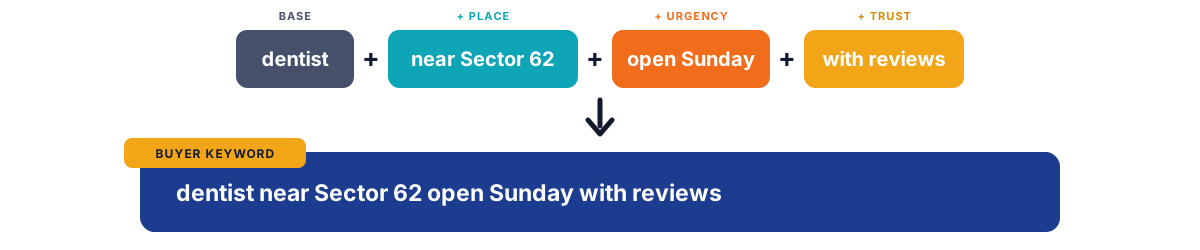
Your buyer starts with a term like dentist. Then your buyer searches “root canal cost in Noida”. Another buyer searches “dentist near Sector 62 with reviews”.
Those longer searches show price, place, and trust. Those are the buyer moments your keyword list should capture.
AI SEO Keywords vs Regular SEO Keywords
Regular SEO keyword research can start with volume, difficulty, and rankings. AI SEO keyword research starts with your buyer question.
You still check keyword volume and competition. You also check intent, proof, location, and customer words.
| Regular SEO View | AI SEO View |
| Starts with a phrase | Starts with a buyer question |
| Checks search volume early | Checks buyer intent early |
| Builds a keyword list | Builds a keyword plan |
| Looks at ranking chance | Looks at answer usefulness |
| Uses tool data | Uses tools, SERP, and customer words |
| Targets traffic | Targets useful visits and enquiries |
A broad keyword, like ‘packaging machine,’ names a product category. A stronger keyword adds useful buying detail.
Example: automatic pouch packing machine supplier in Delhi NCR.
The stronger keyword shows product type, place, and supplier intent. It tells you what your buyer needs.
Google states site owners should continue following SEO basics for generative AI features in Search. Google also treats AEO and GEO for Google Search as SEO. It is not a separate shortcut.
Use search volume when you need scale. Use buyer intent when setting priorities.
Search Intent Comes First
Search intent tells you why your buyer searched. Buyer intent shows closeness to a call, booking, enquiry, or sale.
Before you choose a keyword, ask what your buyer wants next. The keyword should point to one main page type.
| Search Term | Intent | Best Page Type |
| what is AI SEO | Informational | Blog article |
| best skin clinic in Noida | Trust research | Trust page |
| dental implant cost in Noida | Pricing | Cost page |
| Shopify vs WooCommerce India | Comparison | Comparison article |
| plumber near me open now | Local urgency | Emergency service page |
| website traffic but no leads | Problem-solving | Diagnosis article |
Take dental implant cost in Noida as an example. Your buyer does not want a general dental article. Your buyer wants cost factors, treatment details, proof, and booking context.
That keyword needs a cost page or pricing article.
Pick search intent before choosing the keyword. Then choose the keyword with better context.
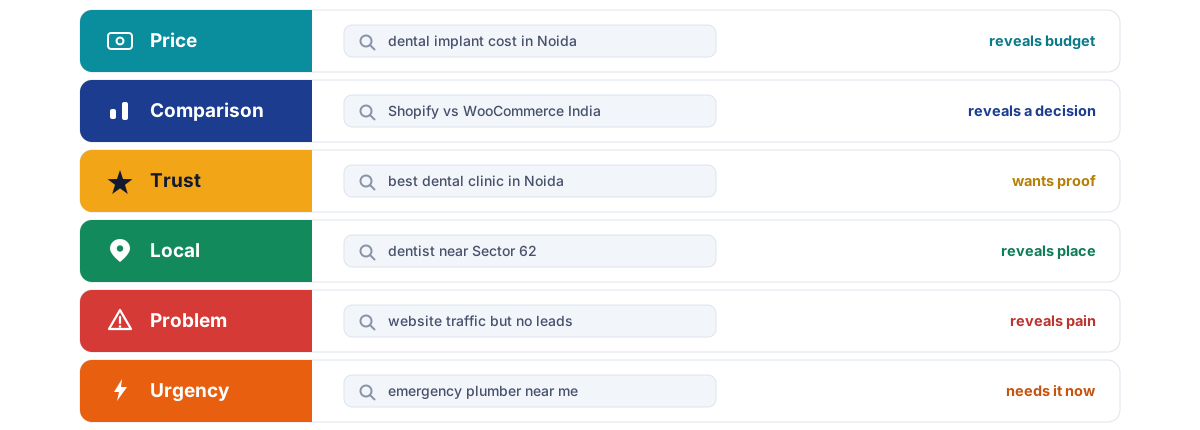
6 Buyer Intent Keyword Signals
Buyer intent signals help you find keywords with business value. Use these signals to spot the searches closer to action.
Price Keywords
Price keywords show budget research before a buyer calls.
Examples:
- dental implant cost in Noida
- IVF cost in Delhi NCR
- 3 BHK flat price in Noida Extension
- pest control cost for 2 BHK
Use price terms only when you can support them. Add sourced ranges, visible packages, or first-party pricing notes.
Comparison Keywords
Comparison keywords show your buyer is weighing options.
Examples:
- Shopify vs WooCommerce India
- CBSE school vs international school Noida
- local SEO vs paid ads
- dentist vs orthodontist for braces
Your comparison page should help the buyer choose. Show tradeoffs and proof, not blind promotion.
Trust Keywords
Trust keywords appear when buyers want proof before spending money.
Examples:
- best dental clinic in Noida
- preschool reviews near Sector 62
- trusted property lawyer in Noida
- packers and movers reviews Greater Noida
If you use best, trusted, reviews, or ratings, add proof. Do not write trust claims without support.
Local Keywords
Local keywords connect buyer need with place.
Examples:
- dentist
- dentist in Noida
- dentist near Sector 62
- dentist open Sunday near Sector 62
- dentist near Sector 62 with reviews
Each added place detail makes the keyword sharper. Check local results and Google Business Profile queries before writing.
Problem Keywords
Problem keywords show pain before your buyer knows the solution name.
Examples:
- website traffic but no leads
- AC cooling issue after service
- back pain office chair
- property registry problem Noida
A problem keyword can become a blog, support page, or service page. It can also reveal a service need your website misses.
Urgency Keywords
Urgency keywords show your buyer needs help soon.
Examples:
- emergency plumber near me
- same day AC service Noida
- dentist open Sunday near me
- website indexing issue help
Use urgent terms only when your business can support the promise. False urgency damages trust with your buyer.
How to Find AI SEO Keywords
The best AI SEO keywords start with buyer need, not tool exports. Start with the question your buyer would ask.
Then check search data, SERP type, and customer words.
Step 1: Write Down What Your Buyer Wants
Start with the need behind the search. Ask one question: what must your buyer solve before contacting you?
Examples:
- Clinic: I need a doctor I can trust.
- Property: I need a flat within budget.
- Education: I need a course linked to jobs.
- E-commerce: I need the right product.
- B2B: I need a supplier who can deliver.
A buyer phrase beats an internal service name.
Step 2: Turn That Need Into Search Questions
Write questions your buyer would actually ask. Good questions sound close to calls, messages, and sales chats.
Examples:
- How much does a dental implant cost in Noida?
- Which preschool near Sector 62 has strong reviews?
- Which CRM works for a small sales team?
- How do I choose a packaging machine supplier?
- Which property lawyer can help with registry issues?
Use full buyer questions before short keywords. Short keywords can come later in planning.
Step 3: Add Words That Show Buying Intent
Add words that show price, trust, place, comparison, service, or action.
| Intent Type | Words to Use |
| Price | cost, fees, package, quote |
| Trust | best, reviews, trusted, expert |
| Local | near me, Noida, Delhi NCR, Sector 62 |
| Comparison | vs, compare, alternative, better |
| Service | agency, consultant, supplier, company |
| Action | book, call, hire, buy, demo |
Base term: property lawyer.
Stronger term: property lawyer in Noida for registry issue.
The stronger term shows service, place, and problem.
Step 4: Use AI to Expand the Keyword List
Use AI for ideas, not final proof. AI can reveal missed questions, intent groups, and local modifiers.
Prompt:
List buyer-intent keyword ideas for a [business type] in [location]. Group them under price, comparison, trust, local, problem, and urgency. Do not invent search volume or tool data.
Ask AI to return these planning fields:
- Keyword
- Buyer intent
- Funnel stage
- Page type
- Local modifier
ChatGPT Search responses that use search can include inline citations and source links. Treat those links as clues, then check the source yourself.
Step 5: Check Every Keyword Before You Use It
Check each keyword before you create content.
Use:
- Google Search Console
- Google Keyword Planner
- Live Google SERP
- Semrush
- Ahrefs
- SE Ranking
- Google Business Profile queries
- Sales calls
- WhatsApp enquiries
- Customer emails
- Competitor pages
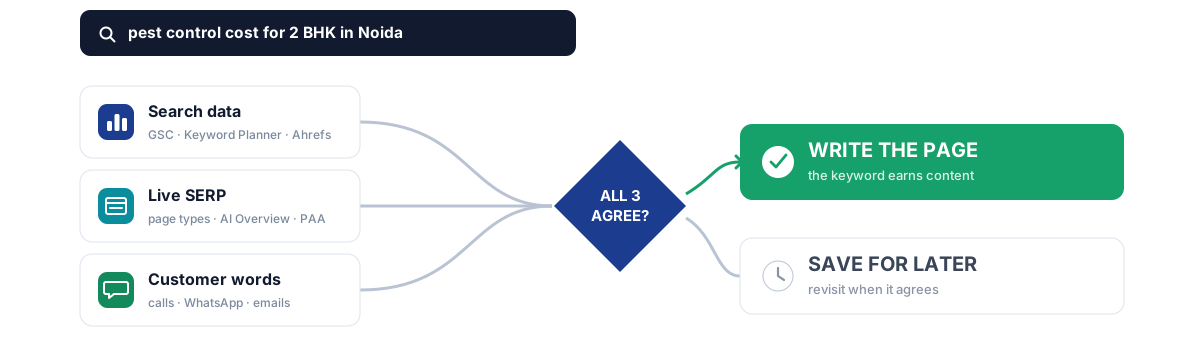
Sample keyword check: pest control cost for 2 BHK in Noida.
Search the keyword in the live SERP. Read the live SERP before creating content. Compare the keyword with customer messages. If pricing pages and local providers appear, the keyword deserves pricing content.
Tool data helps, but customer words and SERP type reduce waste. Google also warns site owners about third-party SEO tools and services. Review SEO advice with caution.
Use a keyword only when data, SERP, and buyer intent agree.
Use SERP Analysis Before You Choose Keywords
SERP analysis helps you see what kind of page Google prefers. It stops you from writing the wrong page for a good keyword.
Check these points:
- What page types rank?
- Are results blogs, service pages, product pages, or tools?
- Are results local or national?
- Do results show pricing, comparisons, reviews, or lists?
- Is there an AI Overview?
- Are there People Also Ask questions?
- Are top pages current?
- Do competitors answer the buyer question directly?
Use the pattern you see most, not the format you prefer.
| SERP Pattern | What to Create |
| Mostly blog posts | Informational article |
| Mostly service pages | Service page |
| Mostly lists | Comparison or best-of page |
| Mostly local businesses | Local SEO page |
| Mostly pricing pages | Cost page |
| AI Overview present | Direct answer with sources |
| PAA questions present | FAQ or short answer sections |
Mini case: use pest control cost for 2 BHK in Noida.
If pricing pages dominate, build cost content. If service pages dominate, improve the service page. If People Also Ask appears, add short FAQ answers. If local results appear, add Noida area context and proof.
Google has a Search Central page for AI Overviews and AI Mode. It covers AI features from a site owner view.
Never force an article when the SERP points elsewhere.
Match Each Keyword to the Right Page
After you find a strong keyword, match it to one page. A strong keyword fails when it sits on the wrong page.
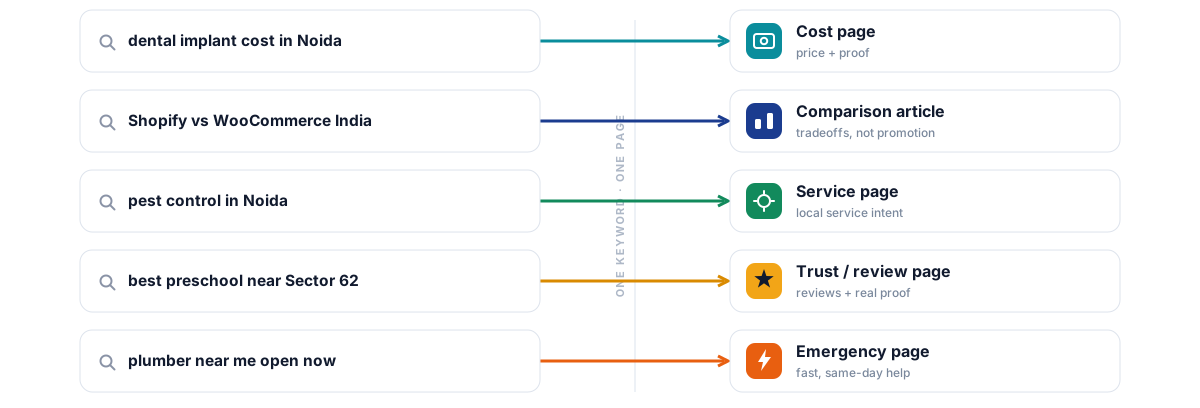
| Keyword Type | Example | Best Page Type |
| Definition keyword | what is AI SEO | Blog article |
| How-to keyword | how to choose CRM for small business | How-to article |
| Price keyword | dental implant cost in Noida | Cost page |
| Comparison keyword | Shopify vs WooCommerce India | Comparison article |
| Local service keyword | pest control in Noida | Service page |
| Industry keyword | packaging machine for namkeen business | Industry page |
| Trust keyword | best preschool near Sector 62 | Trust or review page |
| Urgency keyword | plumber near me open now | Emergency service page |
Worked mapping:
- Keyword: website traffic but no leads
- Intent: problem-solving
- SERP type: diagnosis content
- Best page: lead diagnosis article or conversion audit page
- Proof: Search Console data, enquiry data, or analytics notes
Do not put every strong keyword into one article. Assign each keyword one job.
Build an AI SEO Keyword Map
A keyword map helps you turn buyer searches into page ideas. It also shows what proof each page needs.
Start with the buyer problem. Write what your buyer wants solved in plain words. For this article, the problem is: I need better keywords linked to enquiries.
Next, add the keyword. Here, the keyword is how to find AI SEO keywords. Then mark the intent. This keyword has informational and commercial research intent.
Now add the buyer signal. For this topic, the signal is problem-solving. The reader wants better keywords, not general SEO theory.
After that, check the SERP type. If blog articles rank, the keyword needs an authority article. If service pages rank, the keyword needs a service page.
Then add the source. Use SERP results, Search Console, keyword tools, customer questions, or Google Business Profile data. Do not treat an AI idea as a source.
Finally, note the proof needed. A strong page may need an official source, a worked example, a customer question, or first-party data.
For this article, the map would read like this:
- Buyer problem: I need better keywords linked to enquiries.
- Keyword: how to find AI SEO keywords.
- Intent: informational and commercial research.
- Buyer signal: problem-solving.
- SERP type: blog articles.
- Page type: authority article.
- Source check: SERP, Search Console, and customer questions.
- AI answer target: show how to find buyer keywords.
Each row needs a source check before writing. If no source supports the keyword, save it as an idea.
Use the map before you assign content work. It shows which keyword needs a blog, cost page, service page, or FAQ.
Make the Page Useful for AI Search
After you find the right keyword, write a page that answers it well. Search engines need crawlable pages. Your buyers need plain answers and supported claims.
Use this checklist:
- Add a short answer near the top.
- Use the main keyword in the H1 and early text.
- Use H2S for related buyer questions.
- Use plain definitions.
- Maintain brand, service, and location names.
- Cite important claims.
- Add FAQ only for actual questions.
- Make the page indexable.
- Avoid fake stats and fake examples.
For Google, AI Overviews and AI Mode are part of Search. Google covers those AI features for site owners in Search Central.
Google also states SEO basics still apply to generative AI search. Its page treats AEO and GEO work for Google Search as SEO. For ChatGPT Search, OpenAI states search responses can show citations and source links.
For Perplexity, its crawler page states Perplexity-User can visit a page. The response can include a link to that page. Use this only for crawl and source visibility context.
Weak claim: We can get you cited in AI answers.
Safer claim: We can structure your page for better answers, stronger proof, and crawlability.
Avoid these claims:
- Guaranteed AI citation
- ChatGPT ranking promise
- Instant AI visibility
- Secret AI SEO trick
Strong AI SEO work can improve structure, proof, and answer quality. It cannot guarantee AI citations.
Common AI SEO Keyword Research Mistakes
Weak keyword research wastes content effort before writing starts.
- Choosing keywords only through search volume.
- Trusting AI keyword lists without checking them.
- Ignoring buyer intent.
- Skipping local keyword signals.
- Creating too many thin pages.
- Using tool data without SERP review.
- Writing for AI tools before buyers.
- Adding fake stats or fake examples.
- Putting the keyword on the wrong page.
- Believing ranking or AI citation promises.
Bad plan: one e-commerce article targets running shoes, sizing, ankle pain, discounts, reviews, and returns. The page has too many jobs.
Better plan: create a category page for running shoes. Add a size page for sizing questions. Write a support article for ankle pain. Put reviews and return details where buyers expect them.
Build a sharper keyword plan, not a longer list.
AI SEO Keyword Research Template
Use this template before creating any SEO or AI SEO page.
| Field | Example |
| Buyer problem | My website gets traffic but few leads |
| Keyword | how to find AI SEO keywords |
| Intent | Informational or commercial |
| Buyer signal | Problem |
| SERP type | Blog articles |
| Page type | Authority article |
| AI answer target | Show how to find buyer keywords |
| Source check | Google SERP, keyword tool, customer questions |
| Proof needed | Google AI source, tool data, worked example |
Use the template before writing the page. A keyword without a source check should remain in the planning sheet.
When Your Keyword List Needs Review
Your keyword list needs review when traffic grows, but enquiries lag. Look for these signs:
- You get traffic but few leads.
- You rank for broad keywords, not buyer keywords.
- You do not know which keywords need service pages.
- Competitors rank for best, cost, near me, and vs searches.
- Your blogs do not support sales pages.
- You want AI search visibility but lack answer targets.
Example: a broker ranks for broad property blogs. The site has no locality page, price page, or comparison page. Buyers arrive, read, and leave without a useful next step.
SEO Noida can review buyer keywords, SERP type, page mapping, and local keyword structure. No agency can guarantee rankings, traffic, or AI citations.
FAQ
What are AI SEO keywords?
AI SEO keywords are search terms and buyer questions used before a choice. They include cost terms, near me terms, comparison terms, review terms, and full AI prompts. They help you see what your buyer needs before calling, booking, buying, or comparing.
How do I find AI SEO keywords?
Start with your buyer need. Turn that need into search questions. Add price, trust, local, comparison, or action words. Then check each keyword with SERP results, keyword tools, Search Console, and customer questions.
What is buyer intent in keyword research?
Buyer intent shows how close your buyer is to action. A phrase like pouch packing machine supplier in Delhi NCR shows supplier intent. A phrase like Shopify vs WooCommerce India shows comparison intent.
How do I check if an AI keyword idea is valid?
Treat the AI output as an idea list first. Then check the keyword in the live SERP. Compare it with keyword tools and customer questions. Look for matching page types before writing.
Should I use search volume or buyer intent first?
Use buyer intent first. A smaller keyword can bring better enquiries. It shows price, trust, location, or a need for comparison. After intent looks strong, check volume to decide priority.
How do I choose the right page for each keyword?
Match the keyword intent with the page format.
| Keyword Intent | Page Type |
| Price | Cost page |
| Comparison | Comparison article |
| Local service | Service page |
The SERP should confirm the final page choice.
Can AI SEO keywords guarantee rankings?
No. Keywords can improve planning, content focus, and page matching. Rankings still depend on competition, technical SEO, content quality, links, crawlability, and site trust. No honest SEO agency can promise fixed rankings or AI citations.

Manish Singh is Head of Generative AI at SEO Noida and has 14+ years of experience in SEO, UX, and digital marketing. He focuses on how Google and AI platforms find, interpret, and cite web content. His articles cover AI SEO, GEO, AEO, LLM SEO, entity optimization, content architecture, and visibility measurement, drawing on website audits and campaign work.