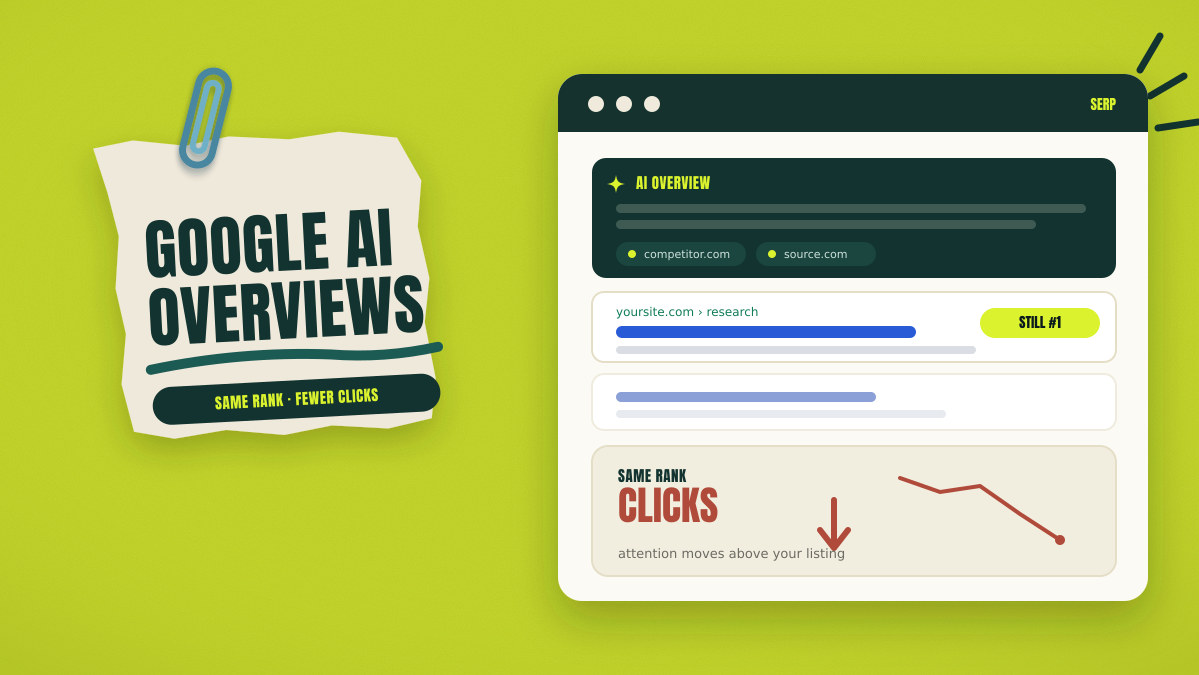
Google AI Overviews affect SEO by changing four things at once visibility, clicks, citations, and how you measure performance while usually leaving your organic ranking untouched. A software page holds position 1 for valuable research queries. Google places an AI Overview above the organic listing, and a competitor at position 5 receives the supporting citation.
Impressions remain stable, while organic clicks begin falling. The ranking is unchanged, but users see the generated answer first. That pattern shows how Google AI Overviews affect SEO. Pages now need visibility inside both organic results and AI source links.
Evidence Snapshot
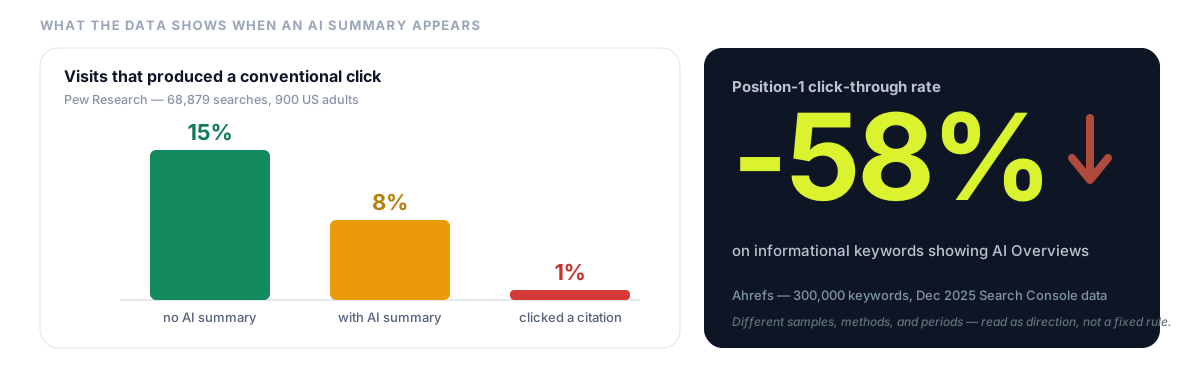
Pew observed user behaviour across 68,879 searches from 900 United States adults. Ahrefs compared 300,000 informational keywords using December 2025 Search Console data. Each dataset used different samples, methods, markets, and research periods.
What Are Google AI Overviews?
Google AI Overviews are generated answers shown within Google Search. They combine information from several web sources and include supporting links. Google displays them when a generated summary may support the query.
| Search feature | What users see | Source pattern | Main purpose |
|---|---|---|---|
| AI Overview | Generated answer within Search | Several linked sources | Topic summary |
| Featured snippet | Extracted page passage | One main source | Short answer |
| AI Mode | Conversational research space | Several searches and sources | Deeper follow-up research |
A featured snippet highlights one passage from one primary page. An AI Overview combines several sources inside one generated response. AI Mode supports deeper research through follow-up questions and comparisons.
Consider a search about software for a 20-person agency. The AI Overview may cover pricing, ownership, reports, integrations, and user limits. Supporting links may include product pages, research, reviews, and documentation.
Google may search several related topics before creating one answer, a process it calls query fan-out. Source links can differ across two closely related searches.
Four Ways AI Overviews Affect SEO
The impact reaches four separate areas. Each area needs a different metric and business response, and combining all four can hide the cause of a decline.
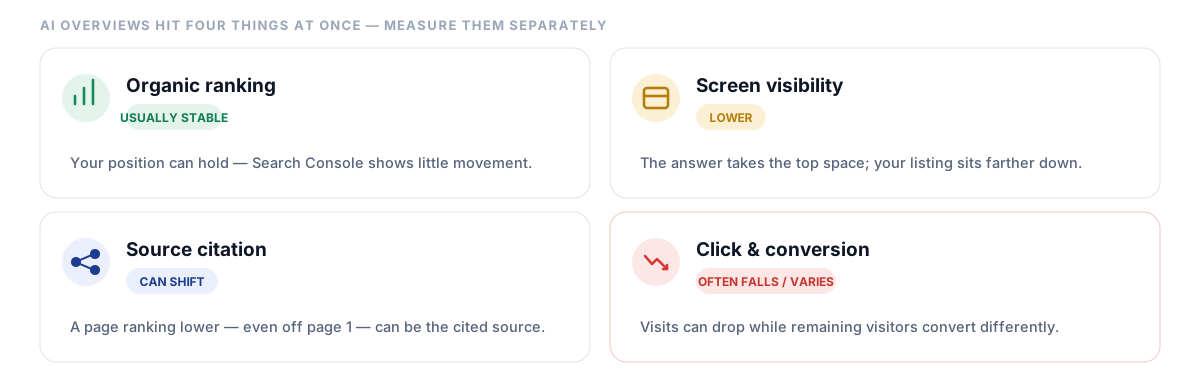
Organic Ranking
A page can retain its conventional organic position. Search Console may show little movement across average ranking data.
Screen Visibility
The generated answer can occupy the upper result area. Organic listings may appear farther down the screen, and position 1 then receives less immediate visual attention.
Source Citation
A lower-ranking page can receive a citation above stronger organic listings. Independent research found nearly 30% of cited domains outside first-page results, so Google may cite pages beyond conventional first-page listings.
Click and Conversion
Visits may decline while visitor quality changes differently. Ranking, citation, click, and conversion need separate reporting.
Organic Ranking Versus Result-Page Attention
AI Overviews preserve conventional rankings while changing visible placement. A page can retain position 1 beneath a large generated answer, so ranking reports alone miss the attention change.
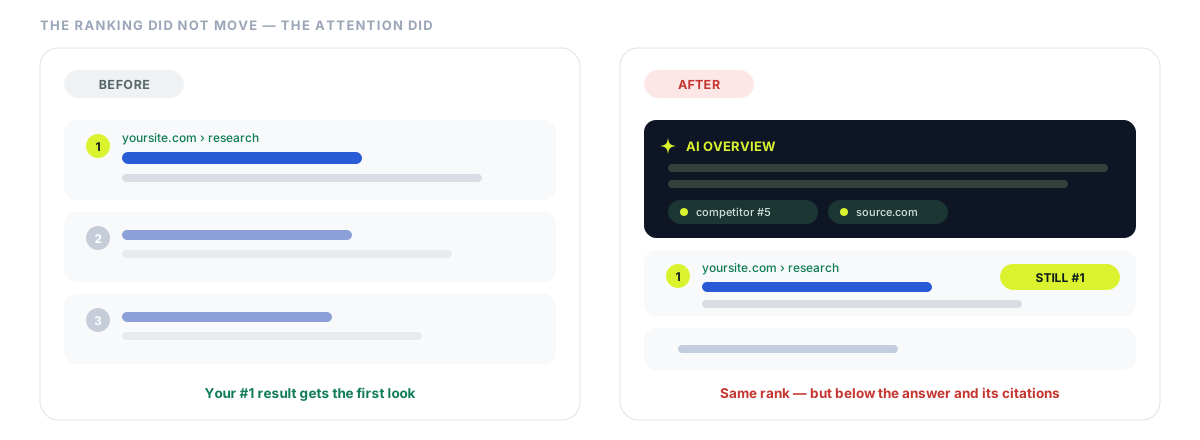
The software page still holds position 1 inside Search Console. Google places the AI Overview above its conventional listing, and a competitor receives citation within the generated answer.
Average position barely changes across the tracked period. Organic clicks decline despite stable impressions and ranking data. Citation checks show which competitors appear inside the AI Overview.
Google must be allowed to show text from the page — permission it calls snippet eligibility within normal Search results. Google requires no extra technical process for AI Overview source links.
Why Traffic Can Fall Without a Ranking Drop
Traffic can fall when an AI Overview answers the query before any click. Organic rank may remain unchanged beneath the generated response, while citation presence and search intent shape the remaining click opportunities.
The same page can retain ranking strength while losing traffic. AI Overview placement receives attention before conventional links, and citation absence removes another possible source of exposure.
Observed User Behaviour
Pew tracked 68,879 searches from 900 United States adults. Conventional results received clicks during 8% of AI summary visits, while visits without summaries produced conventional clicks during 15% of searches.
Cited summary links received clicks during 1% of summary visits. Sessions ended after 26% of visits containing summaries, versus 16% of visits without AI summaries.
Publisher Keyword Data
Ahrefs compared 150,000 informational keywords containing AI Overviews against another 150,000 without them. December 2025 data showed a 58% lower average position-1 CTR.
The comparison used aggregated Search Console data across keyword groups. It tracked aggregate groups and excluded identical user tracking, and different markets and industries can produce different percentage changes.
Independent Traffic Research
A 2026 Wikipedia study used 161,382 matched article pairs and found that AI Overview exposure reduced daily English article traffic around 15%. Culture pages experienced larger relative losses than STEM pages.
The study used geographic rollout differences across several Wikipedia editions. Wikipedia behaviour cannot represent every commercial or local website, but its design still provides useful causal evidence for informational publishers.
Google Statement
Google reports higher-quality visits from result pages containing AI Overviews.
Google measures its complete search environment across many query groups. Independent studies measure selected publishers, keywords, countries, and user samples. Each dataset measures a different part of user and publisher behaviour.
Business teams should track enquiries, sales, bookings, and qualified sessions. Lower visits may still produce valuable business results across selected pages, so total conversions remain more useful than traffic volume alone.
Which Queries Face the Greatest Click Risk?
Informational queries needing short answers face the greatest click risk. Commercial research can retain stronger visit needs and citation opportunities, and queries needing deeper research create stronger reasons for visiting websites.
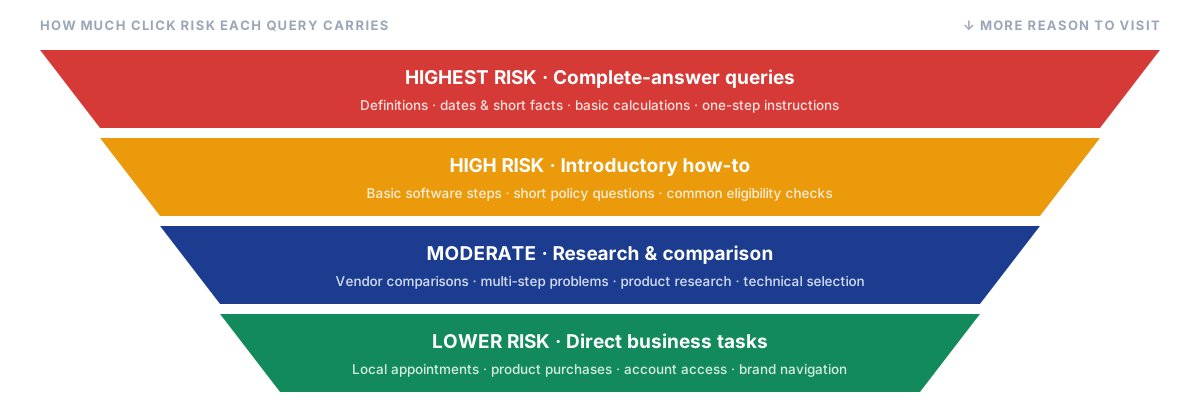
Highest Risk: Complete Answer Queries
A query such as “employee onboarding software” needs a short definition. Google can present that answer inside the results page, and a generic definition page offers little reason for another visit. Highest-risk queries include basic definitions, dates and short facts, basic calculations, one-step instructions, and common term meanings.
High Risk: Introductory How-To Queries
A query about PDF report export may need five short steps. An AI Overview can present those steps without another page visit, while current screenshots and error support can preserve deeper visit value. High-risk queries include basic software steps, short policy questions, common eligibility checks, and basic symptom information.
Moderate Risk: Research and Comparison
A CRM comparison needs pricing, limits, integrations, and workflow examples. One generated summary rarely covers every purchasing criterion. Moderate-risk queries include vendor comparisons, multi-step problems, financial choices, product research, and technical selection.
Lower Immediate Risk: Direct Business Tasks
A local clinic query needs doctors, appointments, directions, and available services. Those tasks require direct access to business pages, and product purchases also need current stock, shipping, and checkout access. Lower-risk queries include local appointments, purchases, account access, stock checks, and brand navigation.
Pew found AI summaries more frequently across longer questions: queries with 10 or more words produced summaries during 53% of searches, while one-word or two-word queries produced summaries during 8% of searches.
Semrush found 71% growth across commercial-intent AI Overview results. Its study covered 600,000 United States desktop keywords across 10 industries, and purchase-ready query coverage declined 5% during the six-month research period.
Can Citations Recover Lost Visibility?
An AI Overview citation can recover visibility above conventional results. A citation can increase visibility, but it cannot guarantee clicks. Its value may include visits, brand exposure, or later branded searches.
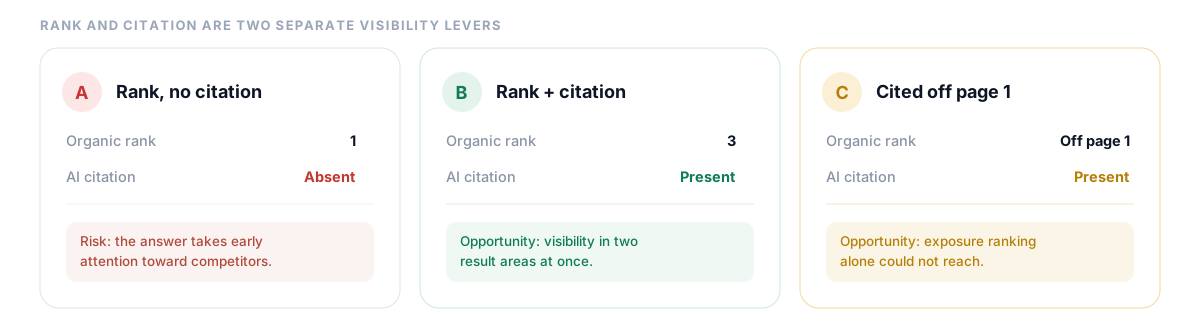
Google may cite pages outside the displayed first-page organic results, and independent research found that pattern across many trending queries. Citation can therefore create visibility unavailable through conventional ranking alone.
Consider an accounting software comparison page with original error testing. Larger websites publish broad feature summaries without testing details, while the lower-ranking page publishes error rates across 12 software platforms.
Google cites the tested error passage within an AI Overview. The citation creates brand exposure before conventional organic links, though analytics must confirm whether cited visibility produces website visits.
Citation lists can change across queries, devices, countries, and dates. One screenshot cannot prove stable AI Overview visibility, so monthly review provides stronger evidence across priority queries.
What Makes a Page Eligible for Citation?
Google requires indexing and normal snippet eligibility for supporting links. Existing SEO practices remain relevant across AI Overviews and AI Mode, and Google publishes no separate formula governing citation selection.
Eligibility Checklist
- Googlebot can access the page.
- The URL returns HTTP 200.
- Google indexes the preferred URL.
- The page remains eligible for snippets.
- Internal links expose the page.
- Important information appears within readable text.
Google confirms each foundational requirement for supporting links. It requires no AI-specific text file or special schema type, so standard Search eligibility remains the technical foundation. For the wider concept, see our explainer on the AI citation.
Weak Passage Versus Cited Passage
Evidence Worth Citing
- Original research
- First-hand product tests
- Named expert input
- Current screenshots
- Case-study data
- Full method notes
- Downloadable evidence
Google now emphasises unique, valuable, non-commodity content across generative Search. Helpful images and videos can support written evidence where relevant, while repeated summaries offer limited additional source value.
Citation Limitation
Eligibility never guarantees crawling, indexing, citation, or source placement. Competition, query context, model choice, and Search systems affect every result. Better evidence improves citation potential without guaranteeing inclusion.
How Content Strategy Should Change
Content strategy should move beyond answers Google can summarise fully. Stronger pages add proof, decisions, examples, and first-hand evidence, and each section should answer one question before adding deeper detail.
The stronger outline connects software features with business problems and decisions, and original testing creates source value beyond basic definitions.
Content Upgrade List
- Open each section with its direct answer.
- Add evidence after every major claim.
- Publish data unavailable elsewhere.
- Show conditions and research limits.
- Support the next reader decision.
- Link separate tasks to focused pages.
Direct answers help readers scan major sections. Evidence then supports trust and source selection, and conditions prevent broad claims from hiding major limits.
Google warns against mass page creation around fan-out variations. One complete page should cover connected questions sharing one main task, while separate pages serve different reader goals.
Generic Claim Versus Tested Claim
The tested claim needs team size, starting data, product version, and method, plus the final result and major limitations. Those details make the statement useful and verifiable.
Content Worth Visiting
- Interactive calculator
- Downloadable worksheet
- Full data table
- Product selector
- Local booking form
- Detailed comparison tool
- Original screenshots
An AI Overview may answer the opening question, so the page should help readers make their next decision. Useful tools offer readers a reason to open the complete page.
Which SEO Foundations Still Matter?
Core SEO work still controls discovery, indexing, relevance, and page usability. AI Overviews use Google Search systems and the existing Search index, so strong content cannot earn citation when Google cannot process its page.
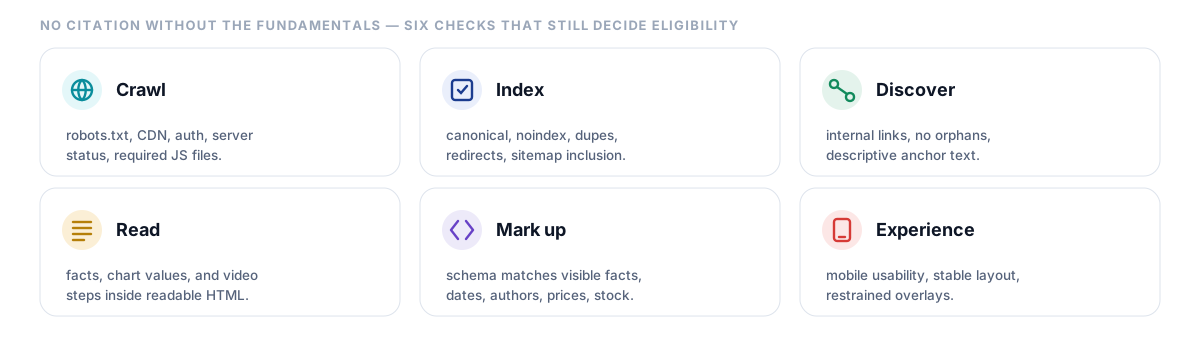
Crawl
Robots.txt tells Google which site areas it may crawl, and a CDN delivers files from servers closer to each visitor. Googlebot needs access through both systems and the main server, so review robots.txt, CDN rules, authentication barriers, server response status, and required JavaScript files.
Index
A canonical tag tells Google which duplicate page version to index, and a noindex tag asks Google to remove a page from Search. Sitemaps help Google find preferred URLs across large websites, so check canonical URLs, noindex status, duplicate pages, redirect targets, and sitemap inclusion. Coordinate this work within your wider technical SEO programme.
Discover
Internal links help Google and readers find supporting pages. Orphan pages have no internal links pointing toward them, and descriptive anchor text should name the destination subject. Review internal links, orphan pages, anchor text, category placement, and related content links.
Read
Important information needs readable HTML text on every page. Images and videos can support those facts through visual evidence, so keep important facts, chart values, video steps, product details, and source notes within accessible text.
Mark Up
Schema markup presents page facts in a format Google can process. Google requires no special schema type for AI Overviews, and conflicting data can weaken eligibility across several Search features, so keep schema matching visible facts, with accurate dates, authors, prices, and stock.
Experience
Mobile visitors need readable content and working controls. Intrusive overlays can block answers and navigation, and stable media supports smoother reading across devices, so check mobile usability, typography, overlays, layout stability, and responsive media.
Technical Example
A research report loads its evidence only after browser scripts execute. Google may receive an almost empty page before those scripts finish, so original data remains unavailable during early page processing. Server-rendered text places report content inside the first page response, and Search Console inspection can confirm the received page content.
How AI Overview Impact Changes Across Page Types
Each page type needs information matching its reader decision. Definitions, comparisons, services, products, and local pages serve different tasks, so their content should support those separate goals.
Definition Page
Query example: What is employee onboarding software? Need: add evidence beyond the basic definition.
The page needs workflow evidence, adoption data, and implementation detail. Basic definitions alone offer limited visit value.
How-To Page
Query example: How do I export reports from accounting software?
Show current interface screenshots for every major step, cover common export errors and their solutions, compare file formats against each task, and name relevant software versions beside every screenshot. Current screenshots, error support, and version notes preserve deeper visit value.
Comparison Page
Query example: CRM versus project management software.
Cover pricing differences, user limits, integration coverage, workflow examples, team use cases, and original testing. Comparison pages can receive citations across several related questions and support visitors entering active research.
Service Page
Query example: Ecommerce SEO audit service for online retailers. Buyer decision: can the provider solve the business problem?
The visitor needs scope, deliverables, proof, price context, and enquiry access. Detailed case studies support comparison between competing providers and help visitors complete the buying decision.
Local Page
Query example: IVF clinic in Salt Lake Kolkata. Local task: find a suitable provider and book access.
The visitor needs address, doctor details, treatments, appointments, and directions. Accurate Business Profile information should match the website, and current hours and booking access support the local task.
Ecommerce Page
Product data: price, stock, variants, images, shipping, and returns.
Product research may produce an AI Overview before shopping results. Product pages still need current commerce details, and checkout requires direct access to the selected retailer.
How Teams Should Measure AI Overview Impact
AI Overview measurement needs separate views for rankings, citations, clicks, and conversions. One metric cannot describe the complete effect, so compare related query groups before and after AI Overview appearance.
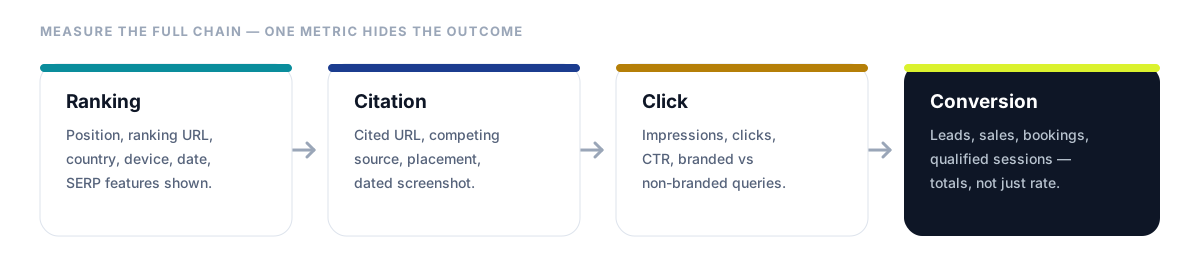
Ranking card: track average position, ranking URL, country, device, and date. Record every major Search feature appearing beside each query.
Citation card: track query, cited URL, competing source, citation placement, and screenshot date. Repeat checks because source lists can change.
Click card: track impressions, organic clicks, CTR, and branded versus non-branded queries. Mark queries displaying AI Overviews during manual reviews.
Conversion card: track leads, sales, bookings, demos, qualified sessions, and revenue. Compare total conversions beside traffic changes across each landing page.
Google launched dedicated generative AI reports on June 3, 2026. Selected properties can view Search and Discover generative AI impressions, and the limited rollout includes AI Overviews and AI Mode visibility.
Average position shows minimal conventional ranking change. Stable impressions show continued exposure, while lower clicks suggest reduced attention. Citation absence shows zero source visibility inside the AI Overview, a higher conversion rate shows stronger quality among remaining visitors, and lower total leads reveal the final business cost.
Teams should compare every metric before changing content, because one isolated number can hide the actual business outcome.
Can Publishers Limit AI Overview Usage?
Publishers can limit displayed content through standard Search preview controls. Those controls also affect other Google Search presentations, so every restriction needs a visibility tradeoff review.
A publisher may want generated summaries to avoid premium excerpts, but nosnippet also removes normal organic snippets from the same page. Stricter preview control means less page text available for AI features and for normal snippets, so compare both visibility outcomes before implementation.
Google-Extended controls selected Google uses outside normal Search results. Googlebot and Search preview controls govern AI Overview inclusion.
What SEO Teams Should Prioritise
Start with pages losing clicks despite stable organic rankings. Separate citation absence from ranking loss before changing content, then improve pages lacking original evidence or useful decision support.
Detect
Find pages showing stable impressions and average positions. Compare clicks before and after AI Overview appearance.
Diagnose
Group affected queries according to user intent. Record citation presence, cited URLs, and competing source pages. Check other Search features affecting the same results.
Improve
Add original evidence, current screenshots, comparisons, and decision support. Remove repeated definitions adding little new information. Connect related tasks through focused internal links.
Verify
Check crawl access, indexing, canonical accuracy, and schema consistency. Confirm major facts within readable page text.
Measure
Compare rankings, citations, clicks, leads, and revenue. Review absolute conversion totals beside conversion rates, and let business outcomes direct later SEO priorities.
Return to the project management software page. Position 1 remains, while citation remains absent, and organic clicks decline across several valuable informational queries.
The page contains broad claims without original workflow evidence. Content revision receives priority before title or heading changes, and citation tracking then measures source visibility after publication.
AI Overviews Change SEO Without Removing Its Foundations
The software page retained position 1 while attention moved upward. Ranking data alone failed to show missing citations and falling clicks, so performance review needed ranking, citation, click, and conversion data together.
Teams still need crawlable pages, useful content, and accurate facts. Start with stable-ranking pages losing clicks, then inspect intent and citation presence.

Manish Singh is Head of Generative AI at SEO Noida and has 14+ years of experience in SEO, UX, and digital marketing. He focuses on how Google and AI platforms find, interpret, and cite web content. His articles cover AI SEO, GEO, AEO, LLM SEO, entity optimization, content architecture, and visibility measurement, drawing on website audits and campaign work.