
Using ChatGPT for SEO starts with verified data and one focused task. ChatGPT can support research, analysis, writing, and technical drafts. Broad prompts leave facts, metrics, and business context missing. A focused workflow links source data, output rules, checks, and implementation.
Weak request
Working request
Use ChatGPT as an assistant during one defined SEO task. ChatGPT cannot replace keyword databases, crawlers, Search Console, or expert approval. OpenAI notes that confident answers can still contain serious errors, so check important claims, calculations, quotations, and cited sources before use.
What Can ChatGPT Do for SEO?
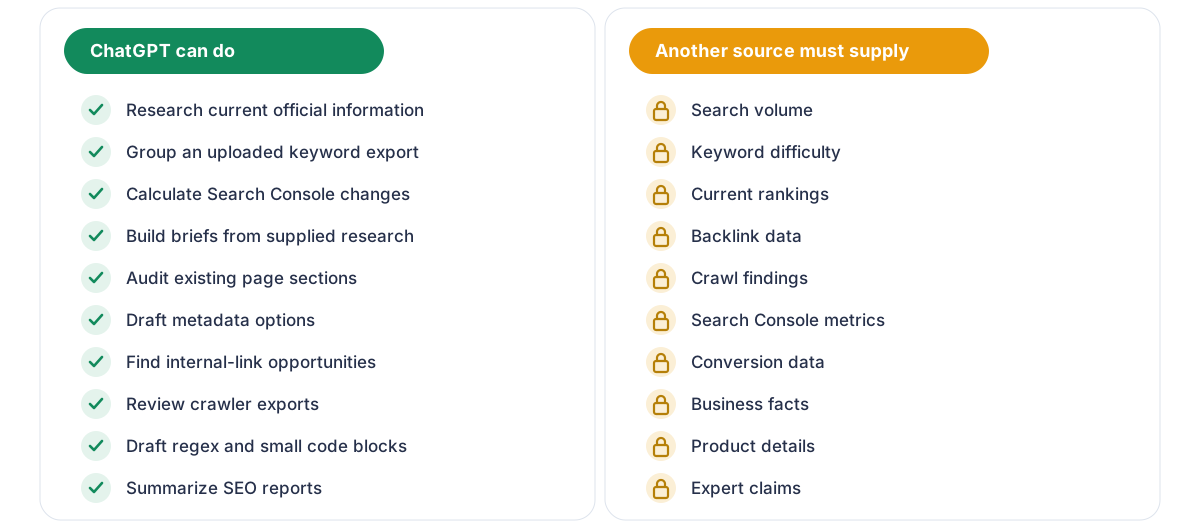
ChatGPT can research, analyze, organize, draft, calculate, and review SEO work. Dedicated platforms must supply rankings, backlinks, crawl findings, and keyword metrics. Verified exports let ChatGPT process those values without inventing missing data.
ChatGPT can help with
- Researching current official information
- Grouping an uploaded keyword export
- Calculating Search Console changes
- Building content briefs from supplied research
- Auditing existing page sections
- Drafting metadata options
- Finding internal-link opportunities
- Reviewing crawler exports
- Drafting regex and small code blocks
- Summarizing SEO reports
Another source must supply
- Search volume
- Keyword difficulty
- Current rankings
- Backlink data
- Crawl findings
- Search Console metrics
- Conversion data
- Business facts
- Product details
- Expert claims
ChatGPT Search can retrieve current web information with source links. Data Analysis can inspect uploaded files and perform code-backed calculations. Deep Research can compare many sources and produce documented reports. Every result still needs source review before implementation.
Choose the Right ChatGPT Feature for Each SEO Task
Choose one primary ChatGPT feature from the task and source data. Add another feature only when the workflow needs it.
| SEO task | ChatGPT feature | Required input | Expected output |
|---|---|---|---|
| Research current platform rules | Search | Focused current question | Cited answer |
| Compare many ranking pages | Deep Research | Query, market, review fields | Cited research report |
| Analyze SEO files | Data Analysis | CSV, Excel, JSON, or text | Calculations and grouped findings |
| Continue one website program | Projects | Files and project instructions | Shared working context |
| Edit one page section | Standard chat | Text, brief, and rules | Revised section |
| Repeat one internal process | Projects or custom GPT | Approved instructions and files | Repeatable review output |
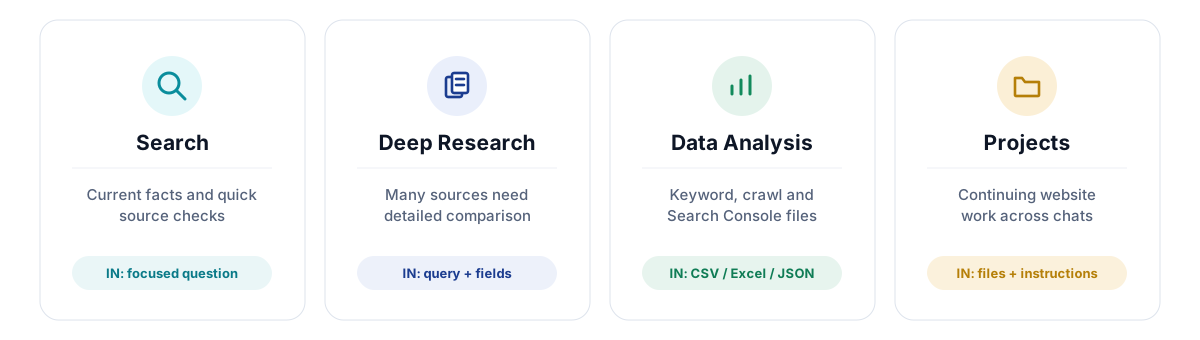
Use Search for current facts and quick source checks. Use Deep Research when many sources need detailed comparison. Use Data Analysis for keyword, crawl, and Search Console files. Use Projects for continuing website work across several chats.
Example only
- Current Google AI policy: Search
- Review 20 ranking pages: Deep Research
- Group a keyword CSV: Data Analysis
- Maintain one website program: Projects
- Rewrite one approved section: Standard chat
Prepare Verified SEO Data Before Prompting
ChatGPT output follows the quality and scope of supplied SEO data. Verify every metric, market, device, date, and source before upload. Mark missing values without adding unsupported replacements.
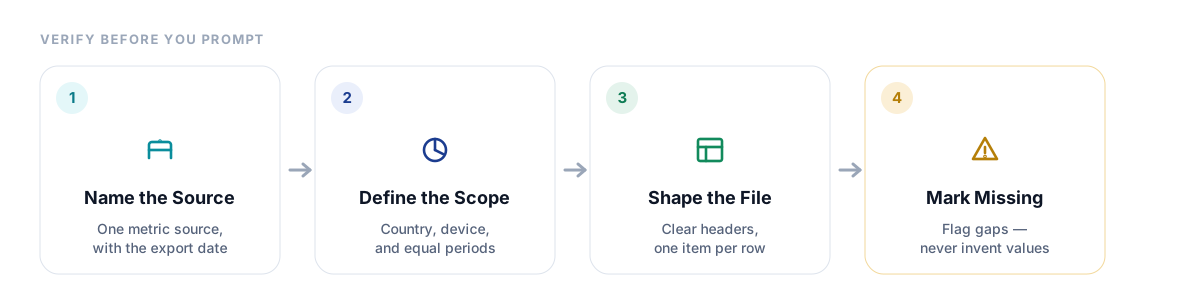
Gate 1: Name the Source
A metric source is the platform supplying each number. Search volume from one platform may differ from another platform. Use one metric source across direct comparisons. Note the export date beside the source name.
Gate 2: Define the Scope
Add the country, device, folder, page group, and comparison period. Search intent can differ across markets and devices. Performance comparisons need equal time periods for valid trend analysis. Crawl exports need the exact crawl date.
Gate 3: Shape the File
Use descriptive headers in the first spreadsheet row. Put one keyword, page, or issue on each row. Place one related dataset inside each sheet. Remove empty rows separating the main dataset.
Gate 4: Mark Missing Values
Leave missing fields empty or write Source required. Ask ChatGPT to flag every empty field before analysis. Never replace missing volume, difficulty, rank, or traffic values. Return to the original platform for missing data.
OpenAI recommends descriptive headers and one item within each row, and warns against unrelated tables and split spreadsheet sections.
Weak file example
The headers hide the metric source, market, and collection date. The value traffic could describe volume, clicks, visits, or another metric.
Improved file example
The improved row names each metric and its source. ChatGPT can now preserve values and identify missing fields.
Use ChatGPT Search for Current SEO Research
Use ChatGPT Search when an SEO answer depends on current web information. Restrict policy, product, and technical research to official domains where possible.
Open ChatGPT and select Search from the tools menu. Enter one focused research question with named source limits. Request source dates and direct links within the answer. Separate sourced facts from your later interpretation. Open every important citation before using the answer. Compare each claim with the linked source page.
ChatGPT Search may start automatically for questions needing current information. Select Search manually when official sources need priority.
Prompt example
The answer should identify permitted research and content-organization uses. It should identify large low-value production as a spam risk. Google asks creators to focus on accuracy, quality, relevance, and usefulness. Google also recommends checking metadata and schema before publication.
Return the answer for correction when official sources are missing. Remove claims lacking support within the linked page. Discard outdated policy statements presented as current guidance. Remove every ranking promise or unsupported performance claim.
Review Ranking Pages With Deep Research
Use Deep Research when many pages need cited comparison. Define the query, market, page count, review fields, and reader goal first.
Research question
How do current ranking pages teach ChatGPT SEO workflows?
Required scope
- Target query
- Country
- Device
- Research date
- 20 opened pages
- SEO task intent
- ChatGPT visibility exclusion
Capture from every page
- Page title
- Publication or update date
- Main headings
- SEO tasks covered
- Required input data
- Prompt examples
- Worked outputs
- Verification instructions
- Limits and warnings
- Missing practical details
Select Deep Research from the tools menu. Describe the outcome and allowed source types. Review the proposed plan before research begins. Remove irrelevant sites and add missing review fields. Inspect the final citations and source list. OpenAI documents access to websites, uploaded files, and enabled apps.
Prompt example
A useful report should provide one row for each opened page. It should also identify repeated advice across the complete page group. The report should name missing workflow steps across the page group. It should separate observed page content from editorial interpretation.
Return reports covering fewer than 20 opened pages. Discard heading summaries collected only from search snippets. Separate SEO work from ranking inside ChatGPT. Remove traffic or ranking claims lacking verified platform data. Require cross-page findings beyond repeated page summaries.
Use ChatGPT for Keyword Research From a Verified Export
ChatGPT can group supplied keywords and preserve verified metrics. A keyword platform must supply volume, difficulty, rankings, and current URLs.
Upload the keyword export through Data Analysis. Ask ChatGPT to inspect headers and missing values first. Confirm the file contains one keyword on each row. Add country, date, metric source, current rank, and ranking URL. Use one keyword-platform source across direct metric comparisons. Semantic grouping places keywords with similar wording or topics together. A SERP is the Google results page for one query.
Required columns
- Keyword
- Search volume
- Keyword difficulty
- Country
- Captured date
- Current position
- Ranking URL
- Existing page
- Metric source
Prompt example
Example only
ChatGPT may create main workflow, keyword research, content, data, and technical groups. Those groups contain keywords with similar wording and topics. Topic similarity cannot prove one page or several pages. Compare current results before splitting topics across separate pages.
Return the output when any supplied metric changes. Remove new keywords absent from the uploaded file. Require every original keyword row inside the final output. Leave empty cells unchanged until another source supplies data. Require current result evidence before creating separate pages. Choosing which buyer keywords deserve a page is a separate step, and our guide on finding AI SEO keywords your buyers search for covers that selection in depth.
Analyze Search Intent From Current SERP Evidence
Search intent is the main reader goal shown across current results. Query wording alone provides incomplete evidence for intent analysis.
Observed evidence
- Educational articles dominate the current result group
- Prompt libraries appear as supporting resource pages
- Workflow pages cover several practical SEO tasks
- ChatGPT visibility pages create a separate reader goal
Interpretation
- The main reader wants practical SEO workflows
- Prompt examples should support complete processes
- ChatGPT visibility needs one brief boundary note
Capture the query, country, device, and research date. Add top titles, URLs, page types, snippets, and SERP features. Mark each observation separately from any editorial conclusion. Ask ChatGPT to cite supplied rows supporting each interpretation.
Prompt example
A July 2026 review found educational workflow articles across leading results. Prompt libraries appeared as supporting resources within several reviewed pages. ChatGPT visibility pages answered another reader goal. This article should mention that difference once, then retain SEO-task focus.
Discard intent labels based only on query wording. Return analysis missing the market or device. Use mixed labels when results support several reader goals. Require evidence from supplied rows for every recommendation.
Analyze Google Search Console Data With ChatGPT
Upload a Search Console comparison export for calculations and pattern review. Separate observed change from possible causes during ChatGPT Search Console analysis.
Example only
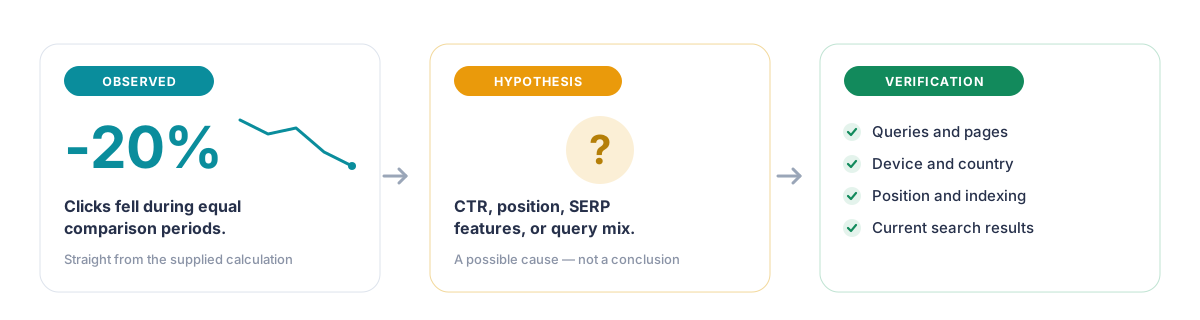
Observed
Clicks fell 20% during the selected comparison.
Hypothesis
A hypothesis is a possible cause requiring supporting evidence. Title relevance, position, SERP features, or query mix may need review.
Verification
Inspect queries, devices, countries, positions, indexing, and current search results.
Use equal comparison periods before exporting the data. Include query, page, clicks, impressions, CTR, position, country, and device. Export current and earlier values within separate named columns. Add the property name and export date. Google limits direct report exports to 1,000 representative rows, while the Search Console API raises that ceiling to 50,000 rows per day and property.
Prompt example
Search Console omits some queries to protect user privacy. Report totals can exceed visible rows after data truncation. Exported unavailable values can appear as zero. A canonical URL is the main page Google groups for reporting, and performance data generally goes to that canonical URL.
Discard analysis converting correlation into a final cause. Use N/A when the earlier value equals zero. Return reports missing country, device, or comparison dates. Require supporting evidence beyond the reported average position.
Create an SEO Content Brief With ChatGPT
ChatGPT can build a content brief from verified research and website context. Every section needs one reader question, direct answer, evidence, and verification action.
Use a section card for every proposed heading:
Supply the primary query and current SERP findings. Add the reader profile, existing page, internal URLs, and source pack. A source pack contains approved documents supporting the article. Include verified brand facts and expert experience. Add writing rules, prohibited claims, and page boundaries. Mark every missing fact as Source required.
Prompt example
Example only
Return briefs copying one competitor heading order. Remove statistics lacking links to original source material. Merge sections that repeat the same editorial purpose. Remove invented business experience or customer results. Rewrite headings lacking a practical reader outcome.
Audit and Improve Existing SEO Content
Ask ChatGPT to audit paragraphs against an approved brief and source pack. Approve the audit findings before requesting rewritten copy.
Use one audit card for every paragraph:
Upload the article, approved brief, source pack, writing rules, and prohibited terms. Ask ChatGPT to separate factual claims, advice, calculations, and interpretation. Review each audit finding before accepting any rewrite. Supply missing sources before changing factual paragraphs.
Prompt example
Example only
The sentence contains an unsupported universal claim. It lacks a defined SEO task and measurement source. The sentence also promises productivity without workflow evidence. Remove the sentence or supply measured results with scope.
Follow the seven-step review sequence below before rewriting:
- Audit the paragraph.
- Approve the finding.
- Supply missing evidence.
- Request one revised block.
- Compare old and revised claims.
- Confirm heading focus.
- Check sentence length and prohibited terms.
Return audits rewriting paragraphs without identified problems. Remove added facts absent from the source pack. Replace repetitive feedback with findings tied to each paragraph. Request editor approval before producing any rewritten copy.
Use ChatGPT for On-Page SEO
ChatGPT can draft metadata and internal-link ideas from supplied page content. Every option still needs page-level review and live URL checking.
Write Meta Titles and Descriptions
Supply page purpose, query, H1, reader outcome, and character target. Ask ChatGPT for several accurate options with visible character counts.
Weak input
The request lacks page purpose, search intent, and content scope.
Working input
Google recommends descriptive, concise, distinct title text and warns against keyword stuffing and repeated boilerplate titles. Character ranges are editorial targets, without fixed display guarantees.
Review every option against the page content. Remove promises absent from the published article content. Compare titles across the website for duplication. Remember that Google may create another title link from page content.
Find Internal-Link Opportunities
Match one source sentence with one verified target page. Use the sitemap and page summaries, avoiding invented URLs.
Upload a URL list containing page titles and short summaries. Add the current article and existing internal links. Ask ChatGPT to name the exact source sentence for every suggestion. Require one reader benefit and one overlap warning.
Prompt example
Open every suggested target page before adding the link. Confirm the page still exists and answers the linked phrase. Check anchor wording against the target topic. Avoid repeating one anchor pattern across many pages. Google recommends logical site structures and concise, relevant internal anchors.
Use ChatGPT for Technical SEO
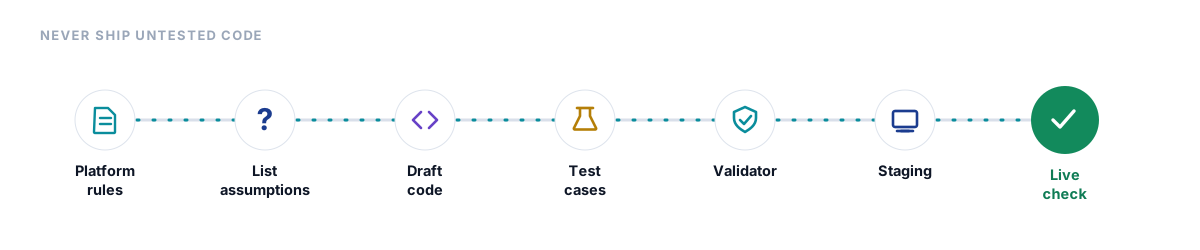
ChatGPT can analyze supplied technical data and draft small code blocks. Staging is a private test version of the website. Every output requires platform documentation, test cases, staging, and live review. For the wider foundation these workflows sit on, see our technical SEO for AI search guide.
Analyze a Crawl Export
ChatGPT analyzes crawl exports after a crawler checks website pages. A crawl export is the file created after that check.
Use one issue card for every issue group:
Upload a crawl file containing URLs, status codes, and indexing access. Include main URLs, titles, H1s, click depth, inlinks, and redirect targets. Ask ChatGPT to preserve every URL exactly. Request grouped issues and a verification step for each. Avoid any claim unsupported through supplied columns.
Prompt example
Return output containing any changed or shortened URL. Remove rendering claims without rendered crawl data. Remove orphan-page claims without complete internal-link data. Require business and indexing context before assigning priorities.
Draft and Test Regex or Code
Start with platform rules and required input details. Ask ChatGPT to list assumptions before drafting code.
Example only
The expression finds queries beginning with one listed question word. The ^ anchor restricts matching to the query beginning. The final \s requires a space after the first word. Search Console filters queries with RE2 syntax, using partial, case-insensitive matching by default.
Test the following queries expected to match:
- how to use chatgpt for seo
- can chatgpt help with seo
- what is chatgpt seo
Test the following queries expected to remain excluded:
- best chatgpt seo prompts
- using chatgpt for content
- chatgpt keyword research
Prompt example
Return code written without current platform documentation. Require matching and excluded tests before approval. Remove invented URLs, IDs, folders, or business rules. Validate code inside a private test site before publication.
Protect Client SEO Data Before Uploading Files
Remove private customer, account, and financial fields before every upload. Use an approved workspace and review current Data Controls.
Remove customer names, email addresses, phone numbers, and account credentials. Remove API keys, login links, private campaign notes, and contract details. Remove revenue or conversion fields unrelated to the analysis. Share only columns required for the defined SEO task.
Check the workspace type and company policy before upload. Personal ChatGPT accounts can disable model improvement through Data Controls. Temporary Chats stay outside history, memory, and model training, and OpenAI deletes them after 30 days.
Business, Enterprise, and API data follow different training defaults. By default, OpenAI excludes business-product content from training. Review current workspace policies before uploading client files.
Example only
A Search Console export may contain queries, pages, clicks, and impressions. That file rarely needs customer names, email addresses, or payment information. Remove every unrelated field before uploading the file.
Check Every ChatGPT SEO Output Before Using It
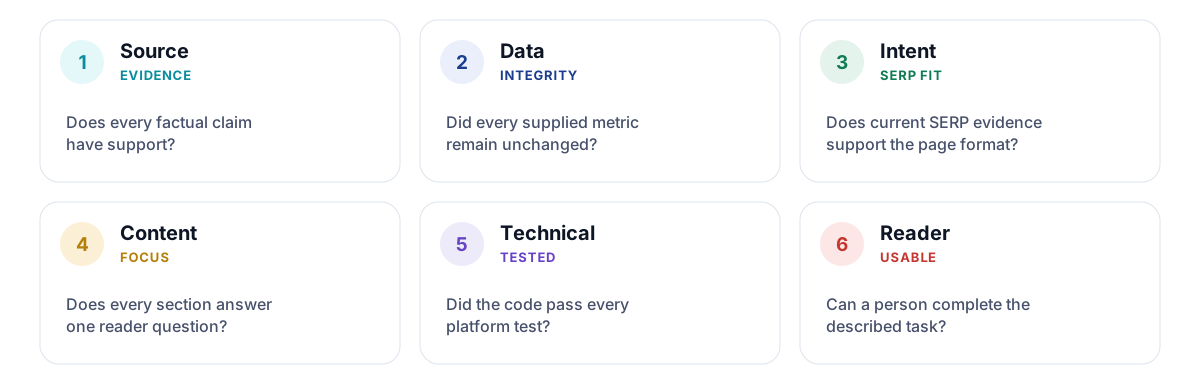
Every ChatGPT SEO output needs source, data, intent, content, technical, and reader checks. Approve the output only after evidence review.
- Source: Does every factual claim have support?
- Data: Did every supplied metric remain unchanged?
- Intent: Does current SERP evidence support the page format?
- Content: Does every section answer one reader question?
- Technical: Did code pass platform tests?
- Reader: Can a person complete the described task?
Require the following labels inside every analytical output:
- Observed
- Calculated
- Interpretation
- Hypothesis
- Verification
- Source required
Example only
The observation comes directly from the supplied calculation. The hypothesis names possible areas requiring further review. The verification line lists the checks needed before conclusions. That format blocks unsupported causes from entering reports.
OpenAI recommends checking facts, quotations, calculations, technical details, and source links. Confidence cannot prove factual or technical reliability.
Measure ChatGPT-Assisted SEO Work
Measure output accuracy, reviewer changes, completion time, and SEO outcomes separately. Workflow changes and SEO changes cannot prove a direct connection.
Example measurement framework
The following formulas are internal review options, without industry-standard status. Use one formula across every comparison period.
Use acceptance rate for outputs passing the required approval process. Define approval criteria before collecting workflow results.
Count only claims checked against original sources. Place unsupported claims inside another review group until verification.
Use editing rate to measure revision volume. A lower rate can still hide serious factual errors.
Use first-review pass rate for prompt and workflow consistency. Apply the same review criteria across comparison periods.
Measure the following SEO outcomes through separate reports:
- Click change
- Impression change
- CTR point change
- Conversion change
- Indexed-page change
- Technical-error change
Measuring how often a brand appears inside AI answers is a related but separate discipline; see how to measure brand visibility across AI platforms for that method.
Example only
Seven outputs pass the first review from 10 total outputs. Three outputs require another review before approval.
The 70% result measures acceptance within the reviewed workflow. It provides no proof of ranking or traffic impact.
Use AI-Assisted Content Within Google Policies
Google focuses on useful, accurate, and people-first content across production methods. Large low-value production for ranking manipulation can violate spam policies.
Acceptable support
- Research current official sources
- Organize original material
- Improve approved wording
- Create metadata drafts
- Draft code for testing
- Summarize supplied data
- Build writer briefs
- Audit existing sections
High-risk use
- Mass publication without review
- Invented expert quotations
- Unsupported statistics
- Thin location pages
- Rewritten ranking pages lacking added value
- Changed dates without substantial updates
- Many query variations answering one need
- Automated pages created mainly for rankings
Google states that generative AI can support research and original-content organization.
It also recommends accuracy, quality, relevance, metadata review, and schema validation.
Google defines scaled content abuse as mass production aimed at ranking manipulation. The production method can include AI, human work, or another process.
Google also published current guidance for generative AI features in Search. The resource emphasizes valuable, unique content and established SEO practices.
ChatGPT SEO Workflow Checklist
Use the following checklist before, during, and after every SEO workflow. Complete each phase before moving into the next one. Recheck the workflow after data, platform, or website changes.
Before ChatGPT
- Define one SEO task
- Choose the suitable ChatGPT feature
- Gather verified source data
- Remove private fields
- Add market, device, and date
- Define the required output
- Name the verification method
Inside ChatGPT
- Upload the required file
- Check headers and missing values
- State one focused instruction
- Prohibit invented metrics
- Request sources and assumptions
- Set the output format
- Request rejection flags
After ChatGPT
- Compare values with the original file
- Open every important source
- Review current SERPs
- Test regex and code
- Confirm every live URL
- Log reviewer changes
- Measure workflow quality
- Save the final approved version
A workflow finishes after source, output, and implementation checks pass. Repeat the checks after data, platform, or website changes.
Frequently Asked Questions About Using ChatGPT for SEO
The following answers cover common limits, data needs, and approval steps. Each answer provides a direct action without repeating the complete workflows.
Can ChatGPT Replace SEO Tools?
ChatGPT can analyze data exported from SEO platforms. Dedicated platforms still supply rankings, backlinks, crawl findings, and keyword metrics. Use ChatGPT for analysis, organization, drafting, and review after collecting verified data.
Can ChatGPT Provide Keyword Search Volume?
ChatGPT needs a verified keyword platform for search volume. Upload exported values and ask ChatGPT to preserve every metric. Return output where missing values receive invented numbers or unsupported labels.
Can ChatGPT Analyze Search Console Data?
Yes, ChatGPT can analyze uploaded Search Console CSV or Excel files. Use equal comparison periods and descriptive column names. Review every calculation against the original export before using conclusions.
Can ChatGPT Write SEO Content?
ChatGPT can draft or edit content from verified facts and expert input. Supply reader needs, source material, section purpose, and writing rules. Review every factual claim against its original source before publication. Add original experience unavailable within competitor pages.
Does Google Penalize ChatGPT Content?
Google evaluates usefulness, accuracy, originality, and spam intent across production methods. AI assistance alone creates no automatic penalty. Mass low-value production aimed mainly at ranking manipulation can violate spam policies.
Can ChatGPT Create Technical SEO Code?
ChatGPT can draft regex, schema, redirects, formulas, and small scripts. Validate every draft through documentation, tests, staging, and developer review.
Which ChatGPT Feature Works Best for SEO Research?
Search works best for quick current questions and official source checks. Deep Research works best for multi-source investigations requiring documented reports. Data Analysis works best for uploaded SEO files.

Manish Singh is Head of Generative AI at SEO Noida and has 14+ years of experience in SEO, UX, and digital marketing. He focuses on how Google and AI platforms find, interpret, and cite web content. His articles cover AI SEO, GEO, AEO, LLM SEO, entity optimization, content architecture, and visibility measurement, drawing on website audits and campaign work.