Takeaways
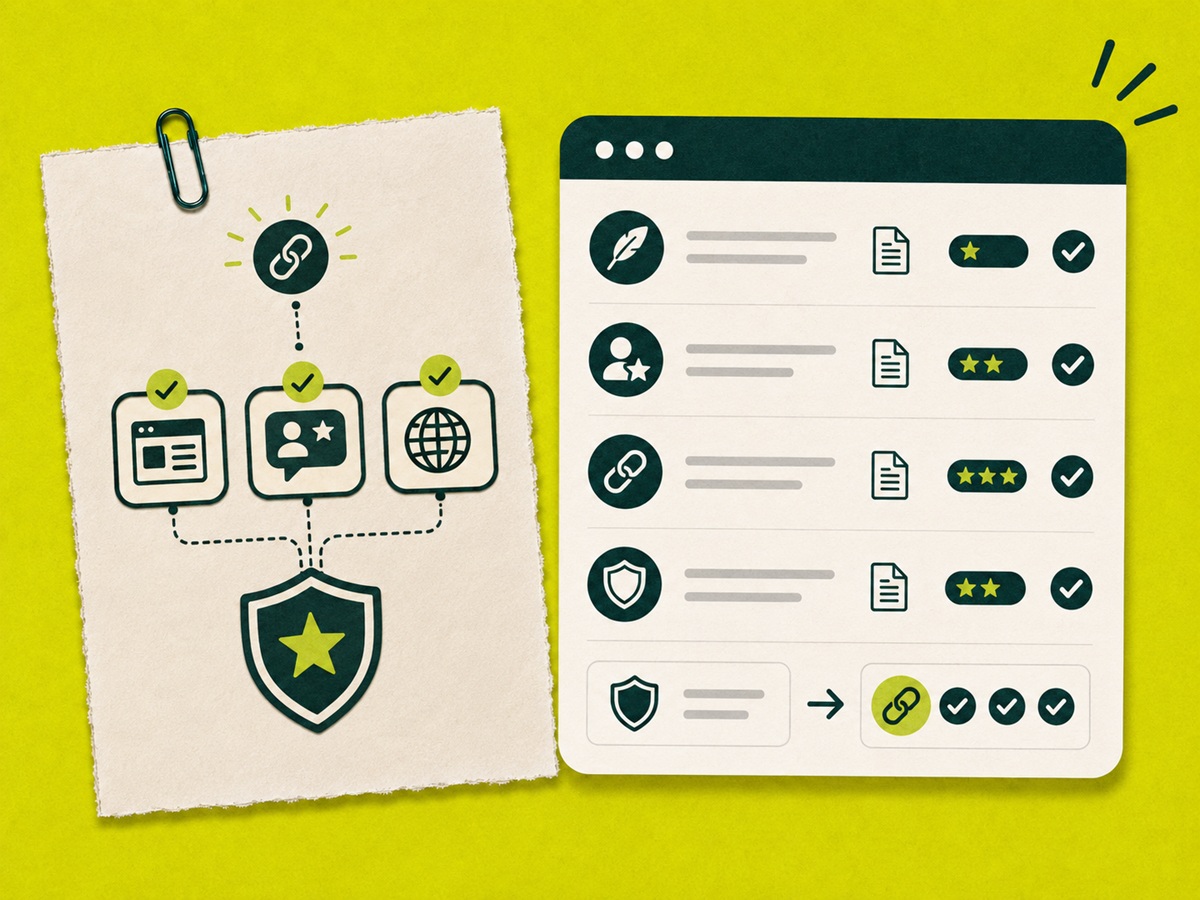
- An AI citation links a source; a mention names your brand.
- Each engine searches through its own web systems.
- Matching business details help AI engines recognise one company.
- Direct answers need sources that readers can check.
- Track citations, mentions, accuracy, answer tone, and AI visits separately.
What Counts as an AI Citation?
An AI citation links an answer to the source supporting it. A brand mention names your company within an AI answer. A recommendation lists your brand among options the buyer could choose. An AI referral brings a visitor from an AI answer.
| Signal | What appears | What it measures |
|---|---|---|
| Citation | An AI answer links to your page | Source visibility |
| Brand mention | An AI answer names your company | Brand recognition |
| Recommendation | An AI answer lists your brand as an option | Buyer choice |
| Referral | A visitor reaches your website from an AI answer | Website visits |
Track each signal separately because every signal measures a different result. One answer may cite your page but name another company.
Where Does Each AI Engine Find Sources?
AI search engines find sources through different systems. Sources can change across prompts, locations, dates, and model versions. Platform studies show one period, never permanent ranking rules.
How ChatGPT Search Finds Sources
ChatGPT Search can turn one question into focused web searches. OpenAI states ChatGPT Search may use third-party search providers. OAI-SearchBot controls inclusion inside ChatGPT Search answers. GPTBot controls possible model training through separate robots rules.
How Google AI Features Find Sources
Google AI Overviews and AI Mode build on Google Search. Both features may search related parts of questions. Google must first index pages and allow standard search snippets. Google requires no special schema or AI file. Helpful content, technical SEO, and accurate information remain essential.
How Microsoft 365 Copilot Finds Web Sources
Microsoft 365 Copilot can send web queries to Bing when web search is active. That option helps Copilot find current public sources.
How Perplexity Finds Sources
PerplexityBot collects pages for the Perplexity search index. Perplexity-User can open relevant pages after a user asks directly. Perplexity can then show linked sources beside its answer.
How Claude Finds Sources
Anthropic uses separate crawlers for search, user requests, and training.
- Claude-SearchBot finds pages that may support search answers.
- Claude-User opens pages after a person asks Claude directly.
- ClaudeBot collects web material that may support future model training.
Anthropic reports that every crawler follows published robots.txt rules.
Do AI Engines Cite the Same Websites?
AI engines cite different groups of websites. Profound tested 100,000 shared prompts across ChatGPT and Perplexity. The two engines shared 11% of cited websites. Track every platform separately for a more accurate brand picture.
What Did One ChatGPT Hotel Test Find?
One hotel test linked ChatGPT mentions with outside Bing visibility. Researchers repeated one New York hotel question 68 times.
| Hotel | ChatGPT mentions | Frequently shown Bing pages supporting each hotel |
|---|---|---|
| The Fifth Avenue Hotel | 13 from 68 responses | 5 from 8 pages |
| Baccarat Hotel | 1 from 68 responses | 2 from 8 pages |
Search Engine Land published the full hotel test process. The test found a pattern without proving what caused it. Use the process to investigate patterns, never predict rankings.
Which Outside Sources Help AI Engines Confirm My Brand?
Outside sources can confirm your services, reputation, and business category. Ahrefs studied 75,000 brands across ChatGPT, AI Mode, and AI Overviews. Branded web mentions showed a strong link with AI visibility. The study found a relationship without proving any direct business outcome.
- Editorial comparisons show how independent writers describe your services.
- Verified reviews record customer experiences on trusted review websites.
- Trade groups and industry directories confirm your business category.
- Community discussions reveal buyer questions, objections, and product experiences.
AI systems can read brand names inside unlinked website text. Choose websites your buyers visit when comparing providers.
How Can AI Engines Recognise My Brand?
AI engines recognise brands when business details match across websites.
- Use the same business name across your website and profiles.
- Match addresses, phone numbers, categories, and opening hours everywhere.
- Publish an About page naming founders, services, locations, and credentials.
- Create author pages showing experience, credentials, role, and final review duties.
- Add Organization schema that matches details visitors can see.
- Use sameAs links to connect official company profiles.
- Maintain your Google Business Profile and Bing Places listing.
Google states Organization markup can help Search read official business details. Schema connects matching details but cannot guarantee an AI citation.
How Should I Write Pages AI Engines Can Quote?
AI engines quote sections answering a specific question. Open every section with a direct answer matching its heading. Follow each answer with evidence, limits, useful examples, and action steps. One heading should answer one buyer question.
Use headings that state each topic in direct words. Place each source beside the statistic or platform claim it supports. Show publication and review dates when facts can change. Show every author name, useful experience, credentials, and editorial role. Cut unsupported praise and claims that lack reliable evidence.
Let the question decide the required answer length. Answer every useful part without adding filler. The original GEO research tested citations, quotations, statistics, and writing quality. Citations, quotations, and statistics increased visibility across tested queries. Results changed across different topics, making one fixed template unreliable.
Which Technical Checks Help AI Crawlers Reach My Pages?
Technical checks help crawlers open, read, and index important pages.
| Check | Passing result |
|---|---|
| Robots rules | Crawlers can access every important page |
| HTTP status | Important pages return a 200 status code |
| Noindex tag | Pages intended for citations allow search indexing |
| Canonical tag | Each page points to its preferred URL |
| HTML output | Rendered HTML contains every main page answer |
| Internal links | Descriptive link text points toward important pages |
| Sitemap | Canonical URLs include accurate lastmod dates |
| IndexNow | Added, changed, or removed URLs receive submission |
Test access with server logs, robots tools, and URL inspection. IndexNow reports URL changes but never guarantees indexing.
How Should I Measure AI Citation Growth?
Report AI citations, brand mentions, and referral visits separately. Start with buyer questions across research, comparison, and buying stages. Record date, location, account status, model, and exact question. Repeat each question because AI answers can change between tests.
| Metric | Calculation |
|---|---|
| Citation rate | Responses citing your website ÷ tested responses × 100 |
| Mention rate | Responses naming your brand ÷ tested responses × 100 |
| Citation share | Your citations ÷ all citations found during testing × 100 |
| Accuracy rate | Accurate descriptions ÷ recorded brand mentions × 100 |
| AI visits | Visits carrying a known AI referral source |
Record each cited URL, competitor, answer tone, and factual error. OpenAI adds utm_source=chatgpt.com to ChatGPT referral links. Bing AI Performance reports citations, cited pages, and search phrases. Google began limited AI visibility reporting during June 2026. Compare monthly results under the same testing conditions. One AI answer cannot show reliable progress.
How Soon Can AI Citations Appear?
AI citations follow no fixed timeline across search engines. Timing depends on crawling, indexing, questions, sources, and model updates. No honest agency can promise a fixed citation date.
Frequently Asked Questions
Can Paid Placement Buy an Organic AI Citation?
No, payment cannot buy an organic citation inside an AI answer. OpenAI keeps ads separate from ChatGPT answers and organic citations.
Does My Brand Need Wikipedia for AI Visibility?
No, your brand can earn AI visibility without a Wikipedia page. Wikipedia requires significant independent coverage before a company qualifies. Build accurate profiles and outside coverage before seeking a Wikipedia page.
Can Existing SEO Pages Earn AI Citations?
Existing SEO pages can earn citations when they answer buyer questions well. Start with pages that already answer valuable buyer questions. Add reliable evidence, direct answers, author details, and crawler access. Create new pages when current pages cannot answer a different question.
How Can I Correct an Inaccurate AI Answer?
Record the wrong answer, cited source, model, question, and date. Inspect cited pages for old or incorrect brand information. Correct your own pages, then ask outside publishers to update theirs. Update every business profile showing the same wrong detail. Retest the same question after crawlers revisit every updated page.
How Much Does GEO Cost in India?
India has no standard market price for GEO services. Costs change with website size, competition, and required work. A useful quote should list research, content, outreach, and tracking separately. Each item needs a named owner, deadline, and success measure. SEO Noida provides a project quote after reviewing current AI visibility. Reject any proposal that guarantees AI citations or fixed rankings.
Want to See Where AI Engines Find Your Brand?
Book a free AI SEO audit with SEO Noida. The audit checks citations, mentions, crawlers, pages, and outside sources. Your report lists ranked fixes for SEO, GEO, and brand coverage. SEO Noida can complete those fixes through its GEO service.

Manish Singh is Head of Generative AI at SEO Noida and has 14+ years of experience in SEO, UX, and digital marketing. He focuses on how Google and AI platforms find, interpret, and cite web content. His articles cover AI SEO, GEO, AEO, LLM SEO, entity optimization, content architecture, and visibility measurement, drawing on website audits and campaign work.