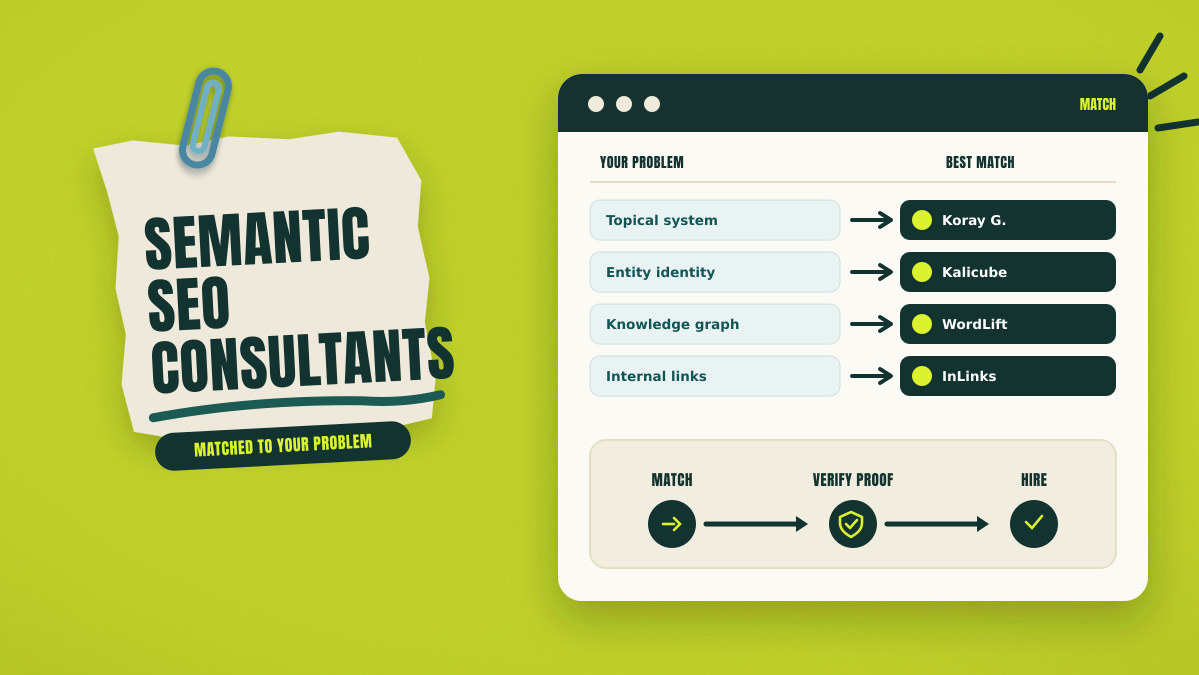
A large website can publish hundreds of pages and still cover its subject poorly. Two service pages may target one need. Helpful articles may lack links to commercial pages. Category, product, author, and location pages may send mixed signals about their roles.
We checked public cases, current roles, stated methods, and proof ownership. We removed profiles lacking public support for their original claims.
SEO Noida disclosure: SEO Noida publishes this comparison and also offers semantic SEO services. Manish Singh appears in a separate in-house section, and we excluded him from the independent shortlist.
Choose the Consultant Around Your Main Website Problem
Start with the failure costing your business traffic, leads, or sales. A well-known consultant can still be the wrong choice for your problem.
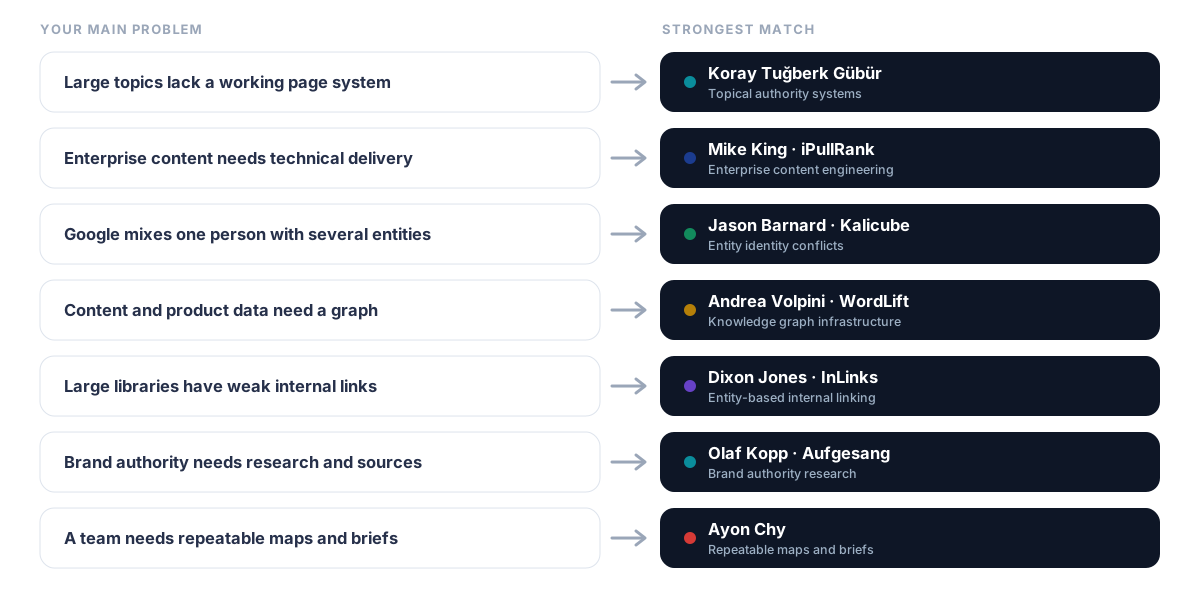
| Your main problem | Strong match | Public evidence reviewed | Evidence limit |
|---|---|---|---|
| Large topics lack a working page system | Koray Tuğberk Gübür | Named, self-published topical authority case | No independent result check |
| Enterprise content needs technical delivery | Mike King and iPullRank | Detailed anonymous telecom case | Client name remains private |
| Google mixes one person with several entities | Jason Barnard and Kalicube | Named Knowledge Panel case | Narrower than broad content architecture |
| Content and product data need a knowledge graph | Andrea Volpini and WordLift | Named SaaS company case | Work belongs to the WordLift team |
| Large content libraries have weak internal links | Dixon Jones and InLinks | Platform customer case | Platform proof differs from consulting proof |
| Brand authority needs research and source analysis | Olaf Kopp and Aufgesang | Current role, research, and public teaching | Limited named campaign data |
| A team needs repeatable maps and briefs | Ayon Chy | Self-published work and product details | Client verification remains limited |
No table can select a consultant alone. Review every proof note before booking interviews.
Weak Topical Authority Starts With Page Decisions
More articles cannot fix unclear page ownership. A complex website needs one primary page for each important need. Supporting pages should answer narrower questions and link toward that primary page.
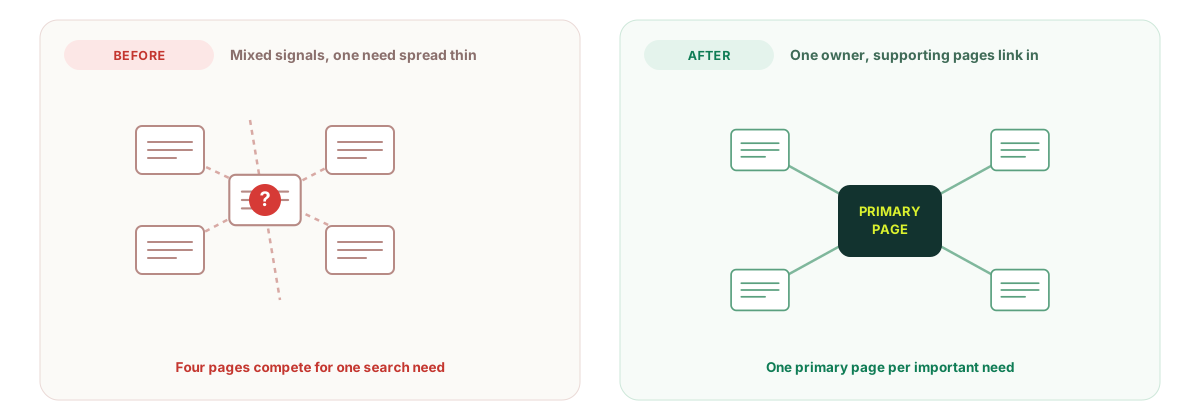
Problems appear differently across four common website types:
- An online store may split one product group across categories and filters.
- A clinic may repeat one treatment across doctor and location pages.
- A SaaS website may target one buyer need across features and blogs.
- A publisher may isolate strong articles inside old topic archives.
Google uses crawlable links to find pages and read their connections, so a poor internal link structure can hide important relationships.
Large filter systems can also create vast URL groups through faceted navigation that buries your priority pages.
A semantic SEO consultant should identify page ownership before proposing content. The first plan should cover overlap, entities, links, redirects, and publishing order.
We Used Four Levels of Public Proof
Google recommends original research, supporting evidence, measurements, and useful comparisons for high-quality review content. We applied those principles to every profile.
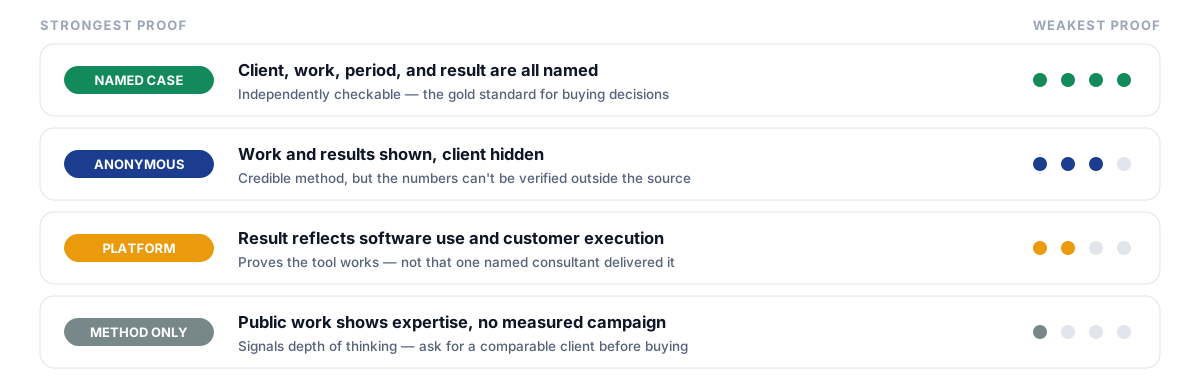
- Named case: the source identifies the client, work, period, and result.
- Anonymous case: the source documents work and results but hides the client.
- Platform case: the result supports software usage and customer execution.
- Method evidence: public work confirms expertise without a measured campaign.
Agency results belong to the agency team. Platform results belong to customer and software use. Self-published figures require direct client checks before purchase.
SEO Noida In-House Option: Manish Singh
Some businesses want semantic SEO, technical SEO, schema, and AI visibility work under one company.
SEO Noida lists Manish Singh as Head of Generative AI within that delivery model, and you can review his profile on his author page.
Public SEO Noida material connects his role with generative AI workflows and search analysis. Our resources also explain semantic search in depth for teams new to the discipline.
Proof boundary: public pages confirm his role and SEO Noida methods, but public sources lack a client campaign owned only through Manish. Company results remain company evidence.
Koray Tuğberk Gübür: Large Topical Systems
Koray suits websites that need a complete subject plan across many pages. His published method covers topical graphs, content order, contextual links, and distinct page roles.
Case snapshot
Holistic SEO reports GetWordly reaching 128,000 monthly organic sessions within 123 days, and its topical authority case reports 12,000 daily organic clicks within 162 days, with Search Console images included.
What the proof supports: Koray has published a detailed system and a named website result. Evidence limit: Holistic SEO published and interpreted its own case, and no outside source confirms the figures.
Choose Koray when your editors can produce a large connected content set. Ask who will train writers, review briefs, and approve internal links.
Mike King and iPullRank: Enterprise Content Engineering
Large companies rarely fail because they lack keyword ideas. Work slows when content, development, design, legal, and analytics teams own separate decisions.
iPullRank documents a three-part response for enterprise websites:
- Reshape passages around direct questions and supporting evidence.
- Improve HTML hierarchy, schema, sitemaps, and page access.
- Measure visibility across search results and AI Overviews.
An anonymous telecom case lists inclusions rising from 712 to 3,235, which the full telecom case labels as 253% growth across 12 months, though the listed endpoints calculate to about 354% growth. The same page reports 1.41 million AI Overview impressions.
For teams weighing a wider programme, iPullRank also publishes an AI Search Strategy Program. Ask which baseline produced the published 253% figure.
The published case keeps the client name private, and the work belongs to the wider iPullRank team. Mike King suits projects needing senior strategy and cross-team delivery.
Jason Barnard and Kalicube: Entity Identity Conflicts
Jason Hennessey had three Knowledge Panels for one person. Google connected separate profiles, book data, and Crunchbase information with different entity records.
The named Kalicube case links the problem, work, time, and result, which offers stronger identity evidence than a traffic screenshot.
For the underlying concept behind this work, see our explainer on entity SEO.
Choose Jason when Google mixes founders, brands, books, social profiles, or old names. A broad ecommerce taxonomy needs a different lead specialist.
Andrea Volpini and WordLift: Knowledge Graph Infrastructure
WordLift connects content entities, product data, and business facts inside a machine-readable knowledge graph. The work can support large catalogues, publishers, and SaaS platforms.
WordLift describes a delivery flow with four connected parts:
- Define the main business and content entities.
- Connect each entity with stable identifiers and relationships.
- Add matching facts within visible pages and schema markup.
- Measure how search systems retrieve those connected pages.
WordLift identifies Andrea Volpini as its CEO on the company page.
Its named Hurree case study reports four times return on investment and 181% impression growth, published by WordLift with delivery owned by its wider team.
The service suits businesses with developers and data owners available. Ask which graph data your company will own after the contract ends.
Dixon Jones and InLinks: Entity-Based Internal Linking
InLinks addresses a narrow problem well: useful pages lack contextual links from related content. Its software finds named entities, assigns target pages, and proposes internal links.
Use the following check before selecting the platform:
- Does each important topic have one approved destination page?
- Can editors reject links inside legal or sensitive content?
- Will the team review anchor text before deployment?
- Can reports separate added links from later traffic changes?
InLinks identifies Dixon Jones as CEO and co-founder on its official company page.
One customer case reports 440% impression growth and 52% click growth after three months.
The case supports the platform and customer implementation, while personal delivery through Dixon remains unconfirmed across public sources. Choose InLinks after your team approves page ownership.
Olaf Kopp and Aufgesang: Brand Authority Research
Some websites have useful pages but weak proof outside their domain. Search systems may find few trusted links among brands, experts, and subjects.
Olaf Kopp studies source entities, patents, AI search, and brand context, and his work sits close to E-E-A-T and source credibility.
His official author archive covers schema, LLM readability, GEO, and digital authority.
Aufgesang confirms his current role across SEO and AI Search.
Public material supports current research depth across several subjects, but public sources contain limited named campaign evidence. Buyers should request a comparable client, finished deliverables, and measurement access.
Choose Olaf when brand proof, expert recognition, public sources, and website content need one plan.
Ayon Chy: Repeatable Maps and Content Briefs
Ayon Chy combines semantic SEO consulting with workflow software. His public website focuses on topical maps, briefs, entity relationships, and repeatable production steps.
Claim check
Published claim: his official website states work across more than 212 brands and reports selected click and impression growth reaching 820% and 540%.
Missing proof: the headline figures lack enough public client detail for independent checking. Quality question: the same website markets a package containing 1,450 GPT-4 articles, so ask how editors verify sources, duplication, entity accuracy, and page purpose. Buyer request: ask for one comparable client, Search Console access, a finished topical map, and a published brief.
Ayon may suit agencies producing many maps across client accounts. Test one small topic group before using the workflow across a whole website.
What a Paid Semantic SEO Engagement Should Deliver
A consultant should leave your team with decisions beyond another keyword file. Require each item below inside the agreement.
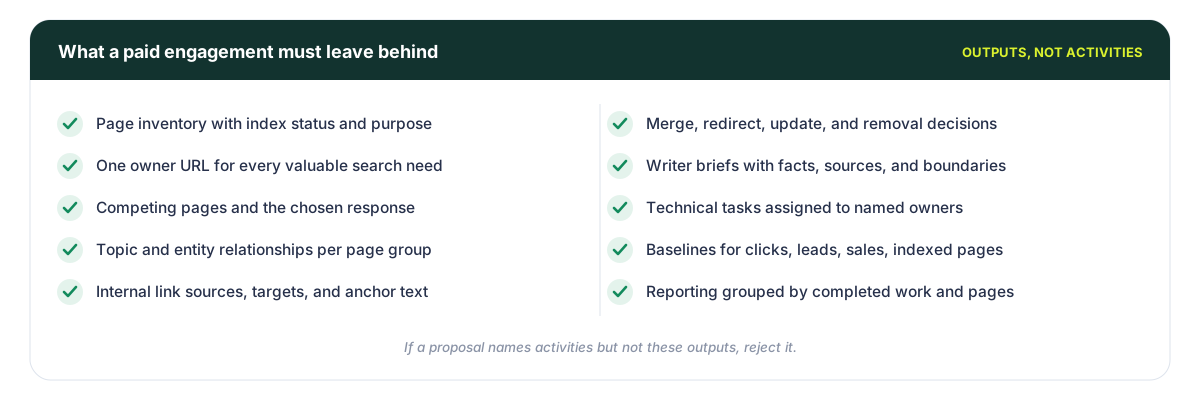
- One page inventory with index status and page purpose
- One owner URL for every valuable search need
- A list of competing pages and the chosen response
- Topic and entity relationships for each important page group
- Internal link sources, destinations, and suitable anchor text
- Merge, redirect, update, and removal decisions
- Writer briefs with facts, sources, headings, and page boundaries
- Technical tasks assigned to named team members
- Baseline data for clicks, leads, sales, and indexed pages
- Reporting grouped around completed work and page groups
Reject any proposal that names activities without naming outputs. The contract should also state who owns maps, briefs, graph data, and software access.
Ask These Questions During Each Interview
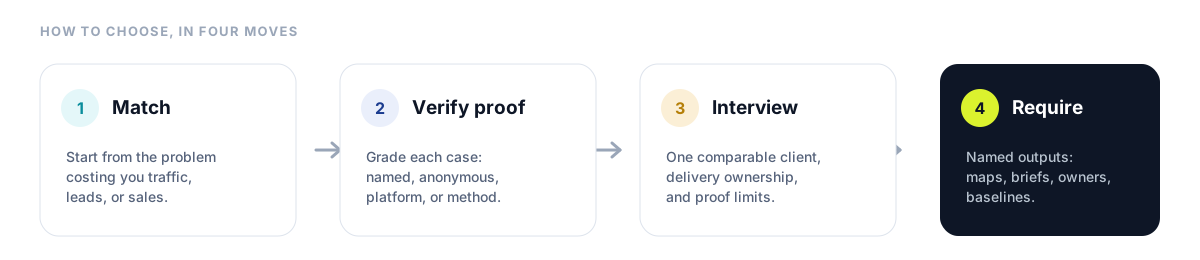
Begin each interview with one comparable client project. Ask for the starting problem, changed pages, work period, and measurement source.
Review delivery ownership during the second interview stage. Who edits templates and who approves redirects? Who checks schema and who updates old articles? Who reports leads, sales, and qualified enquiries?
Request one finished map and one published brief. Each file should show page roles, sources, internal links, target readers, and publishing order. End every interview with questions about proof limits, and separate semantic SEO results from development, links, brand activity, and paid media.
Remove a Consultant From Your List When Proof Breaks
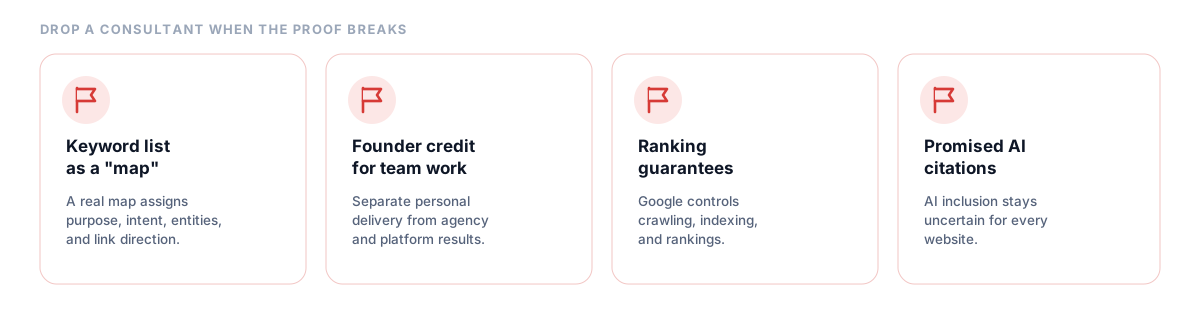
Reject keyword spreadsheets labelled as topical maps. A useful map assigns page purpose, intent, related entities, and link direction.
Reject founder credit for agency cases without written attribution. Separate platform results from personal consulting results.
Avoid ranking guarantees and promised AI citations. Google controls crawling, indexing, rankings, and result presentation, and its AI feature guidance recommends established SEO practices and useful content. AI feature inclusion remains uncertain for every website.
Our Final Shortlist
Choose Koray for a large topical system with strong editorial support. Choose Mike and iPullRank for enterprise delivery across several internal teams. Choose Jason and Kalicube for duplicate or conflicting entity identities.
Choose Andrea and WordLift for knowledge graph infrastructure. Choose Dixon and InLinks for entity-based links across a large content library. Choose Olaf for brand authority research across website and public sources. Test Ayon when repeatable maps and briefs matter most.
SEO Noida remains the disclosed in-house option for combined semantic and technical work. Start with a paid audit covering overlap, entities, links, technical blocks, and ownership.
Get a semantic SEO audit for your website →
Frequently Asked Questions
What does a semantic SEO consultant do?
Consultants assign page roles and connect related topics and entities. Work may include topical maps, content briefs, internal links, schema, merges, redirects, and reporting.
When does a large website need semantic SEO consulting?
Hire a consultant when several pages target one need or important topics lack supporting pages. Weak internal links, mixed entity facts, and repeated content also signal a deeper architecture problem.
What should a topical map include?
A topical map should name each topic, entity, intent, owner URL, and related page. It should also record internal links, sources, page boundaries, and publishing order.
Can semantic SEO reduce keyword cannibalisation?
An audit can find pages targeting the same need. Your team can merge, narrow, redirect, or reposition those pages.
Can semantic SEO support AI search visibility?
Semantic SEO can improve page focus, entity consistency, and answer extraction. Those changes support retrieval, while AI citations remain uncertain.
Should the consultant implement the recommendations?
Complex websites benefit from implementation support and named owners. Plans lose value when nobody owns content edits, redirects, templates, links, or measurement.
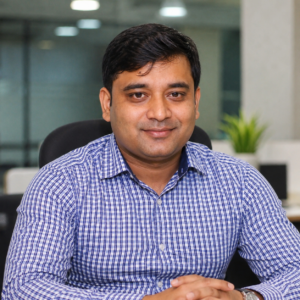
Manish Singh is Head of Generative AI at SEO Noida and has 14+ years of experience in SEO, UX, and digital marketing. He focuses on how Google and AI platforms find, interpret, and cite web content. His articles cover AI SEO, GEO, AEO, LLM SEO, entity optimization, content architecture, and visibility measurement, drawing on website audits and campaign work.